
Last updated November 2, 2026
 Wrought iron
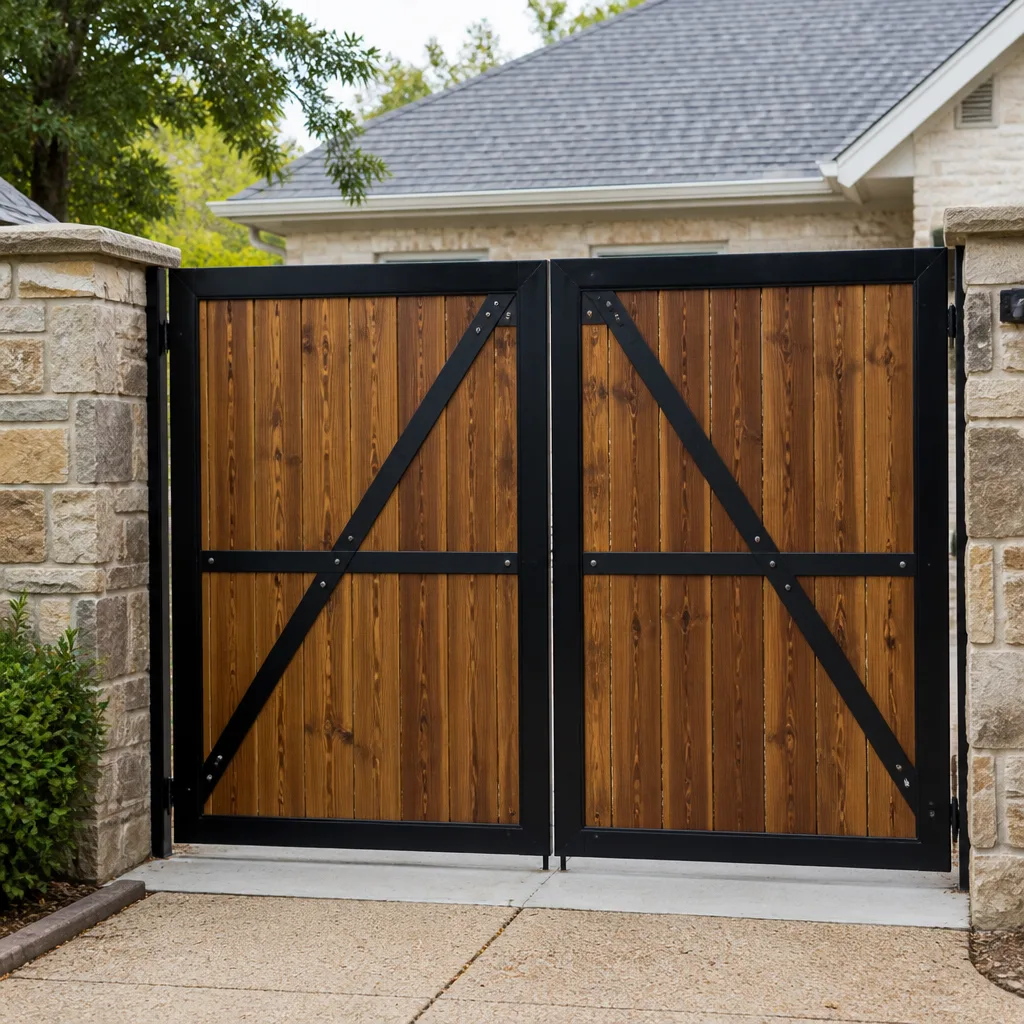 Wood & steel frame
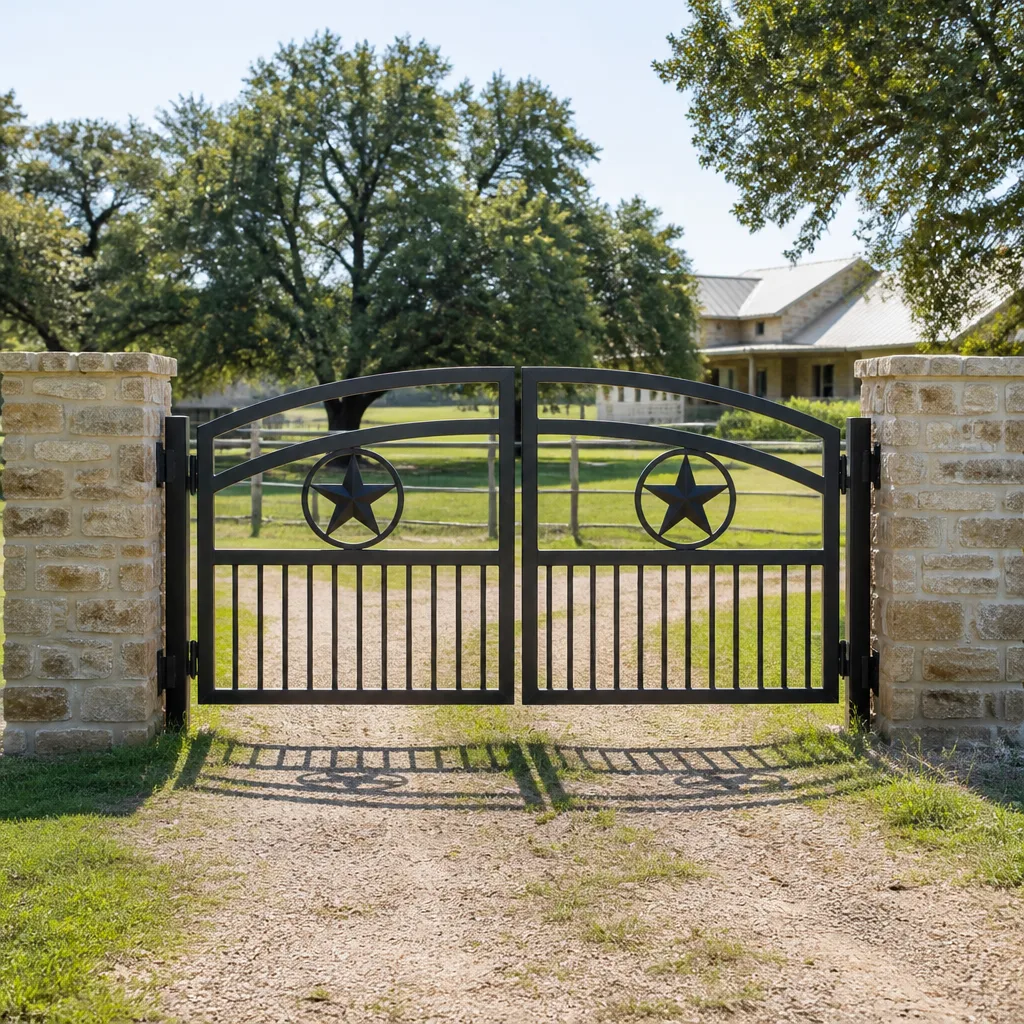 Farm & ranch
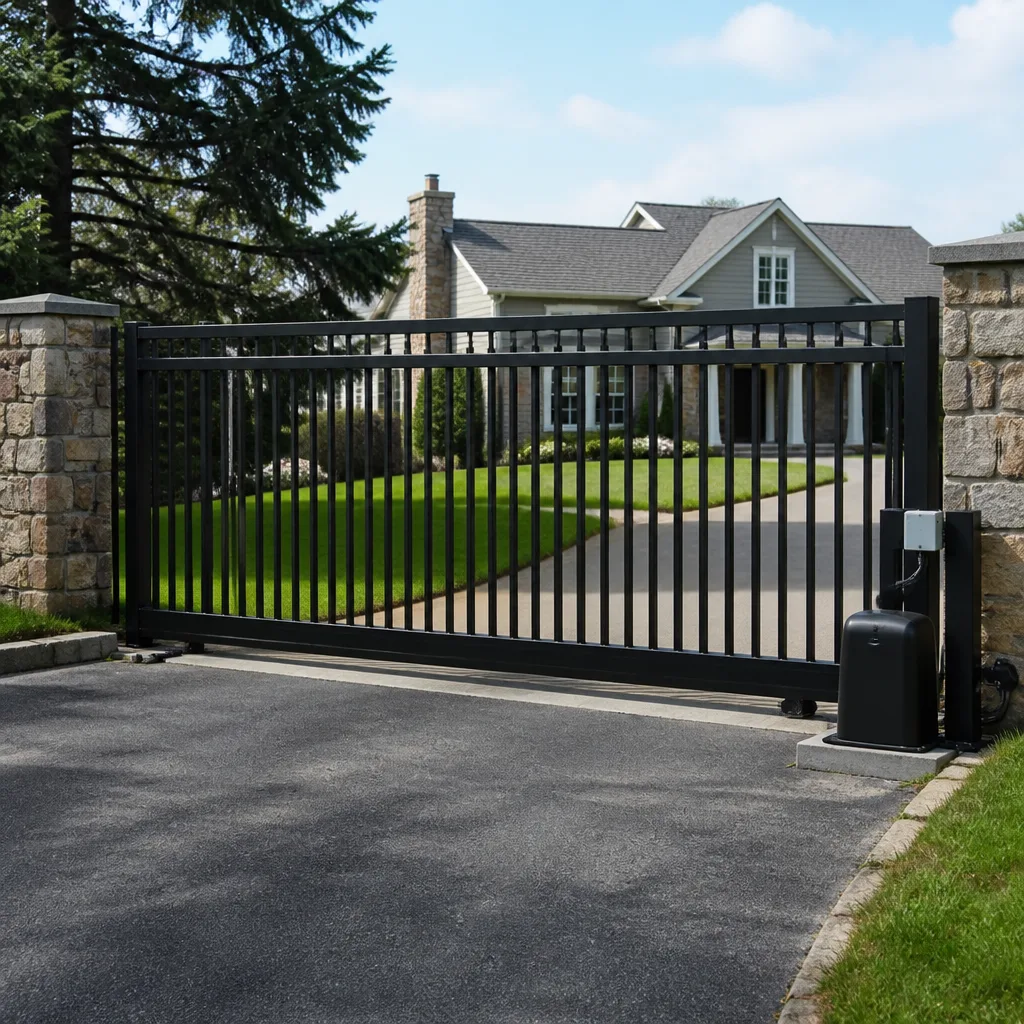 Sliding driveway gates
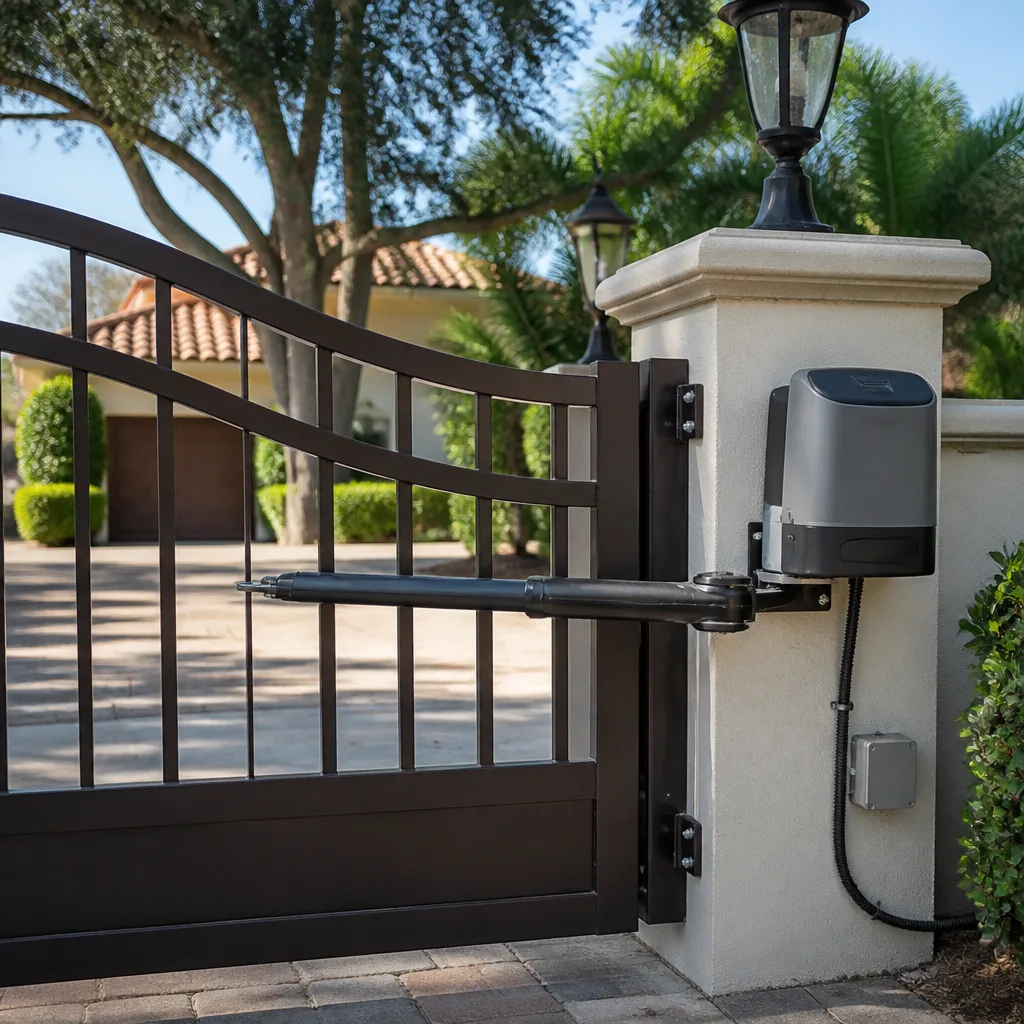 LiftMaster operators
Free on-site gate assessment - hinges, posts, and your LiftMaster or Nice gate operator checked before anything is quoted
The assessment is free and the quote is the invoice.
Get your free estimateSeasonal Gate Repair Care for Lancaster: Year-Round Homeowner’s Guide
Here’s the counterintuitive truth about gate maintenance in Lancaster: your gate doesn’t fail because of the season you’re in. It fails because of the season before it. The swing gate that worked flawlessly through every triple-digit August afternoon is quietly accumulating damage in its operator circuit board, its torque limiter, its hinge bushings. Then November arrives, the overnight temperature drops from 75 to 35, metal contracts, lubricant thickens, and that accumulated wear crosses into outright failure. This guide explains how to read Lancaster’s actual weather pattern – not the generic four-season calendar – and schedule your gate care around the moments that genuinely stress your system, so you’re not learning about a failed operator at 6 a.m. on a windy February morning with your car stuck in the driveway.
Styles & brands we work with
- Wrought iron
- Wood & steel frame
- Farm & ranch
- Sliding driveway gates
- LiftMaster operators
Quick Answer
Lancaster gate care should follow a two-phase annual cycle: pre-summer prep (April to May) to protect against thermal overload and UV degradation, and post-summer/wind-season reinforcement (October to November) to address wear from heat, dust, and Santa Ana wind events before cold snaps turn minor wear into hard failures. The two highest-value actions for any Lancaster homeowner are testing your auto-reverse safety function before wind season and checking operator thermal shutdown behavior before summer, because these two failures strand vehicles and create security openings at the worst possible times.
Table of Contents
- Lancaster’s Actual Climate Reality: Two Stress Phases, Not Four Seasons
- Pre-Summer Prep: What to Do Before Temperatures Exceed 100°F
- Santa Ana Wind Season Readiness: Travel Limits, Auto-Reverse, and Latch Tension
- The Freeze-Risk Window: November Through February Vulnerabilities
- Post-Dust-Storm Inspection Protocol: What to Check First, and in What Order
- Documenting Seasonal Condition Changes: Photos That Help Your Gate Technician
- Brand-Specific Seasonal Notes: DoorKing, Elite, Mighty Mule, and LiftMaster
- Common Mistakes to Avoid
- When to Call a Professional
- Frequently Asked Questions
- The Bottom Line
Lancaster’s Actual Climate Reality: Two Stress Phases, Not Four Seasons
Most gate maintenance guides are written for climates with rain, snow, and clearly defined seasons. They tell you to lubricate hinges in spring and check seals before winter. That advice is not wrong; it’s just incomplete for the Antelope Valley. Lancaster sits in USDA hardiness zone 8b to 9a, but the relevant data is simpler: summer highs routinely exceed 100°F from June through September, winter nights can dip below freezing from late November through February, and Santa Ana wind events typically arrive October through December with gusts strong enough to slam an unlatched gate against its stops.
What this means for your gate is a two-phase stress cycle:
- Phase One: Heat and UV (May through September). Direct sun on a dark metal operator housing can push internal temperatures beyond the rated operating range of your control board. Grease in hinges and pillow block bearings thins, migrates out, and leaves metal-on-metal contact. Rubber seals crack. Battery backups degrade faster at elevated temperatures. Solar panel output is high, but so is the thermal load on charge controllers.
- Phase Two: Wind, Dust, and Cold Snaps (October through April). Santa Ana winds push gates against their stops, test latch strength, and load hinge pins laterally. Dust infiltrates control boards, photo eye lenses, and chain drives. Overnight temperature swings of 30 to 40 degrees cause metal contraction that turns the hairline crack from Phase One into a snapped weld or a seized hinge.
A gate that ran without incident all summer has not avoided damage; it has accumulated it silently. The failure just waits for the first cold snap to announce itself. Homeowners who understand this pattern schedule maintenance before the transition, not after the breakdown.
Pre-Summer Prep: What to Do Before Temperatures Exceed 100°F
The single most preventable summer gate failure in Lancaster is operator thermal shutdown. Every automatic gate operator has a thermal protection circuit that cuts power when the motor or control board exceeds safe temperature. In direct Antelope Valley sun, a metal operator housing can reach 140°F internally even when ambient temperature is 105°F. If your operator was already running near its thermal limit because of a misadjusted force setting, a worn capacitor, or binding hinges, the first truly hot afternoon will shut it down.
Before the first forecasted 100°F day, we recommend this sequence:
- Check hinge and bearing lubrication. Use a dry-film lubricant or lithium grease rated for high temperature. Avoid spray lubricants that evaporate in extreme heat. Wipe away old, darkened grease first; adding new lubricant on top of contaminated grease just traps grit.
- Run a full open-close cycle and listen. Any grumbling, hesitation, or speed change between open and close indicates increased resistance. That resistance translates directly to higher motor current draw and more heat. Fixing binding before heat season is cheaper than replacing a burned motor in August.
- Inspect the operator housing for direct sun exposure. If your operator sits on an unshaded west-facing post, consider a simple shade hood or repositioning the control box to a shaded side. No need for anything elaborate; even a partial shade screen reduces internal temperatures measurably.
- Test your battery backup (if equipped). Heat accelerates battery degradation. A backup battery that tested fine in March may be marginal by July. If your system has a battery test function, run it. If the operator beeps or shows a low-battery indication, replace before the season peaks.
- Clean the photo eye lenses. Dust and UV haze reduce the ability of safety sensors to see each other. A blocked or degraded photo eye forces the gate into fail-safe mode or causes repeated reversals, which overheat the motor.
Brands matter here. We work on LiftMaster, FAAC, BFT, Linear, Viking, Ghost Controls, DoorKing, Elite, and Mighty Mule systems, and they do not all respond to heat the same way. DoorKing operators, common on Lancaster’s larger residential lots and small commercial properties, use a thermal overload that resets automatically but will trip repeatedly if the motor is pulling excessive current. Elite and Mighty Mule residential systems tend to give fewer warnings before shutdown. Knowing your exact brand changes how aggressively you should prep.
If you want a professional pre-summer check, see Electric Gate Repair in Lancaster for what a seasonal inspection includes and which components we prioritize in the Antelope Valley heat.
Santa Ana Wind Season Readiness: Travel Limits, Auto-Reverse, and Latch Tension
Santa Ana winds in Lancaster are not just a comfort nuisance; they are a structural stress test for gates. Gusts commonly reach 40 to 60 mph in the Antelope Valley, and a sliding gate with enough surface area acts like a sail. The three systems that fail most often during and after wind events are travel limits, auto-reverse sensitivity, and latch tension. All three are checkable by a homeowner in under ten minutes.
Travel Limits
Travel limits define where the gate stops when fully open and fully closed. Wind events cause two problems with limits. First, repeated slamming against the mechanical stops can knock the limit switches slightly out of calibration, so the gate now stops an inch short or an inch past where it should. Second, wind pushing against the gate during travel can cause the operator to overrun the set limit, especially if the gate is already slightly under-damped at the end of travel.
Check this way: run the gate closed and watch the final few inches. Does it decelerate smoothly and rest gently against the closed stop, or does it hit with a bump? Run it open the same way. Any impact at end of travel means the limit needs recalibration or the mechanical stop cushions need replacement. On chain-drive slide gates, a loose chain will amplify this problem because the gate can roll slightly even after the sprocket stops.
Auto-Reverse Sensitivity
Auto-reverse exists to stop the gate and reverse direction if it encounters resistance mid-travel, such as a child, a pet, or a car bumper. Wind creates false positives: a strong gust pushing against the gate panel can trigger the reverse circuit even when nothing is actually in the path, causing the gate to bounce back open or stop halfway. The wrong response is to dial the sensitivity down so far that the gate ignores wind. That also makes it ignore real obstructions.
Test by placing a piece of cardboard or a small traffic cone in the gate path and running the gate closed. It should reverse within a few inches of contact. If it doesn’t, the sensitivity is set too low. If the gate reverses on its own during a normal wind gust with nothing in the path, the sensitivity is set too high. Either condition needs adjustment, and adjustment should always be followed by a full safety re-test.
Latch Tension
For swing gates, wind loads transfer directly to the latch and the gate’s physical stops. A latch that doesn’t fully seat or that sits loose allows the gate to slam back and forth against the stop, which bends hinges, fatigues welds, and eventually snaps the latch bolt. For magnetic locks and solenoid latches on automated swing gates, wind load can also cause the lock to bind, drawing excessive current and triggering faults.
Check by closing the gate manually and trying to move it without actuating the latch. There should be minimal play. If you can push or pull the gate leaf more than half an inch at the latch point, the latch or the stops need adjustment. Do this check before wind season, and again after the first significant wind event.
For comprehensive gate maintenance that covers all three of these systems, see Gate Repair in Lancaster.
The Freeze-Risk Window: November Through February Vulnerabilities
Lancaster’s freeze risk is easy to dismiss because it’s brief, but it’s real. Overnight lows below 32°F typically occur on 30 to 50 nights per winter, concentrated between late November and mid-February. The danger is not just the temperature itself; it’s the swing. A 70°F afternoon followed by a 28°F night produces concentrated thermal contraction in metal components, and that contraction finds every weak point you didn’t know you had.
The components most vulnerable in Lancaster’s freeze window are:
- Hydraulic operators. Hydraulic fluid thickens at low temperatures. A hydraulic swing gate operator that was smooth and quiet in September may move sluggishly at 30°F on a December morning. If the fluid is also low or contaminated, the operator may fail to complete a full cycle until it warms up, leaving your gate half-open at the worst time.
- Battery backups. Cold reduces battery capacity significantly. A 12V backup battery that holds a full charge at 70°F may deliver only 60% of its rated capacity at 30°F. If your gate is already marginal on battery runtime, a cold morning power outage will exhaust it faster.
- Weld joints and stress points. Gates expand and contract along their full length with temperature change. Over years, this repeated cycling work-hardens welds, especially at hinge points and diagonal brace connections, until a cold-snap contraction finally cracks them. A gate that shows a rust line radiating from any weld should be inspected before winter, not after.
- Limit switch contacts and relays. Cold contracts metal in relay contacts and can cause intermittent fault signals. A relay that works at 50°F may fail to close at 28°F. Often the first sign is a gate that works fine during the day but faults out on the first cold morning.
- Solar panel charge controllers. For solar-powered gate operators, winter’s shorter days and lower sun angle reduce charge time, while cold nights increase battery self-discharge rates. The system that was fully charged every summer evening may be marginal by December.
One thing homeowners don’t expect: the freeze itself rarely breaks the gate. What breaks the gate is the temperature swing acting on accumulated summer wear. A hinge that was already binding, a weld that was already cracked, a battery already aging from summer heat – these hit failure simultaneously on a cold morning. That’s why pre-winter inspection should focus on identifying and correcting degradation before the cold finds it.
Post-Dust-Storm Inspection Protocol: What to Check First, and in What Order
After any significant Lancaster wind or dust event, a systematic inspection will catch dust-related damage before it compounds. Follow this order; it’s arranged so that each check protects the next one from false readings or missed symptoms.
- Visual scan for physical damage. Walk the full gate path and look for any new bend, crack, or misalignment. Check the gate leaf itself, the posts, the hinges, and the operator mount. If the gate now drags or catches anywhere, note it before running the operator.
- Clear debris from the gate path. Wind deposits tumbleweeds, branches, and loose trash into gate tracks and under swing gates. A slide gate that suddenly faults on close is often just pushing debris. Clear the path fully before testing operation.
- Check the chain or belt tension (slide gates). Wind loads can stretch a chain or cause a belt to jump a tooth. A chain that sags more than a half inch at mid-span needs attention. A belt with visible side wear or tooth damage should be replaced.
- Inspect the photo eyes and clean the lenses. Dust coats the lenses and reduces signal strength. More importantly, wind can knock a photo eye out of alignment by just a few degrees, which causes intermittent reversing. Clean the lenses first, then check alignment with the system’s alignment LEDs if equipped.
- Run a full open-close cycle and listen for new noises. After clearing and cleaning, operate the gate. Note any new grinding, clicking, or hesitation. Compare the sound to how it ran before the storm.
- Test auto-reverse function. Place a lightweight obstruction in the path and verify the gate reverses. Dust storms often knock sensitivity settings slightly off because of the extra force the wind put through the system.
- Check the operator control board for dust accumulation. For operators in unsealed or partially sealed housings, fine Antelope Valley dust gets inside and coats circuit boards, causing intermittent shorts and sensor faults. Blow out the housing with compressed air or have a technician do it if you’re uncomfortable opening the enclosure.
This sequence takes about twenty minutes for most residential gates. Doing it within 48 hours of a major wind event means minor issues get caught before the next wind event turns them into failures.
For gates with persistent electrical or automated issues after wind events, our Electric Gate Repair in Lancaster page covers how we diagnose and resolve wind-related operator problems.
Documenting Seasonal Condition Changes: Photos That Help Your Gate Technician
Most homeowners call a gate repair company when the gate has already failed. They describe the symptom: “It stopped opening.” What they can’t describe is the three-month progression that led to the failure, because they never documented it. A camera phone changes that.
Here’s a simple documentation routine that costs nothing and saves real money in diagnostic time:
Take four photos per season, from the same positions
- Full gate, closed, standing back about ten feet. This shows alignment, sag, and overall condition.
- Operator and control box, from about two feet. This shows the housing, any exposed wiring, LED status indicators, and the general condition of the operator.
- Hinge area, close-up. This is where wear appears first. Hinge pins, bushings, and grease condition all show clearly in photos over time.
- Gate path or track, full length. This catches developing wear on the track, wheels, or ground-contact points.
Take these photos in April, before summer heat, and again in October, before wind and cold season. If a dust storm or high-wind event occurs, photograph immediately afterward.
Why this works
When we see a set of season-over-season photos, we can see degradation progression: a hinge that shows grease weeping in April and dry metal in October, a weld that shows a hairline crack in July and a visible separation in November, a track that was clean in spring and pitted by October. That tells us not just what failed, but what was about to fail. It lets us fix the whole system, not just the part that broke. And it tells us whether a problem is acute or chronic, which changes the repair approach entirely.
This documentation habit is most valuable for electric and automated gate systems, where intermittent faults often leave no visible evidence once the system cools or resets. A photo showing a fault LED illuminated, taken after a wind event, gives us a clue we wouldn’t have from a working system during a service call. If you’re considering a new installation, see Gate Installation in Lancaster for guidance on choosing a system that’s suited to Lancaster’s specific wind and dust conditions.
Brand-Specific Seasonal Notes: DoorKing, Elite, Mighty Mule, and LiftMaster
Different gate systems respond differently to Lancaster’s climate. We service all nine major brands, but these four show up most often in the Antelope Valley, and each has seasonal tendencies worth knowing.
DoorKing
DoorKing operators are common on Lancaster’s larger residential lots and small commercial properties. Their thermal overload circuits are generally well-designed for high-heat operation, but their limit switches are mechanical, which means wind events and repeated hard stops can knock them out of calibration more easily than on electronic-limit systems. If a DoorKing gate starts overrunning its stops after a wind season, limit switch adjustment is usually the fix.
Elite
Elite openers are engineered for reliability in harsh conditions, but their chain-drive slide gate systems need regular chain tension checks in Lancaster’s dust season. Fine dust acts as an abrasive on chain links and sprockets, accelerating wear on a system that would last years in a cleaner climate. Listen for the chain; an Elite chain that snaps or jumps during wind load almost always shows audible warning signs for weeks prior.
Mighty Mule
Mighty Mule is an entry-level residential system, and it’s the one most likely to be under-specified for Lancaster conditions. Single-arm swing gate operators designed for light gates get overwhelmed by high wind loads and continuous heat exposure. If you have a Mighty Mule system, pre-summer lubrication and post-wind limit checks are especially important, because the system has less margin for accumulated wear than commercial-grade equipment.
LiftMaster
LiftMaster residential operators often include battery backup, which is valuable in Lancaster’s occasional winter outages but vulnerable to the same heat degradation as all batteries. The integrated MyQ-style diagnostic LEDs are useful for seasonal checks: learn what the normal LED patterns are so you can recognize when a heat or wind event triggers an abnormal signal.
This is not a complete list of what we service – the full range includes FAAC, BFT, Linear, Viking, and Ghost Controls – but these four are the most climate-sensitive systems in our Lancaster service area.
Common Mistakes to Avoid
- Lubricating without cleaning first. Adding fresh grease or spray lubricant on top of Antelope Valley dust creates an abrasive paste that accelerates hinge and bearing wear. Always wipe old lubricant away before applying new.
- Adjusting auto-reverse sensitivity to stop wind false-triggers. This is the most dangerous mistake we see. Dialing sensitivity down to ignore wind gusts also ignores a child or pet in the gate path. Fix the gate’s wind behavior with limit adjustments and dampers, not by disabling the safety function.
- Ignoring a gate that works “fine” all summer. A gate that is flawlessly operational through heat season is exactly the gate most likely to fail on the first cold morning, because the wear is hidden. Seasonal inspections only work when they happen before the failure.
- Power-washing the operator housing. High-pressure water forces dust and dirt deeper into seals and connectors, creating shorts and corrosion. Use compressed air or a low-pressure rinse, and never spray water directly at the control board area.
- Skipping battery backup checks until an outage happens. A backup battery is a system you hope to never need, but the only way to know it works is to test it. Test before summer heat, and test again before winter’s potential outages.
- Deferring a hinge replacement because “it still works.” By the time a hinge audibly squeaks or visibly sags, the gate leaf is already stressing the operator, the latch, and the post. Replacing a worn hinge is inexpensive compared to replacing an operator motor burned out from extra load.
- Treating solar-powered gates as maintenance-free. Solar charge controllers and batteries need seasonal attention in Lancaster, especially in winter when short days and cold nights combine to reduce system capacity.
When to Call a Professional
Some seasonal maintenance is safe for a homeowner: cleaning photo eye lenses, clearing debris, documenting condition with photos, listening for new noises. Other work should always go to a trained gate technician. Call us when your operator trips thermal protection repeatedly on hot days, when your gate reverses with no obstruction in the path, when you see cracks in welds or stress lines around hinges, when your chain or belt shows visible wear or slack, when your control board shows fault codes you can’t identify, or when the gate has been hit hard enough by wind to move or bend any component. Gate operators carry enough force to cause serious injury, and limit adjustments, force settings, and safety circuit testing belong with someone who knows the system. Gate Repair Lancaster offers free estimates in Lancaster – call (855) 341-7657 to schedule any seasonal inspection or repair.
Frequently Asked Questions
Twice a year is right for most Lancaster gates: once in April or early May before summer heat, and once in October or early November before wind and cold season. Gates with solar power, older operators, or heavy traffic may benefit from a third check in mid-summer or immediately after a major Santa Ana wind event. Call us at (855) 341-7657 for a free estimate on scheduled maintenance.
Yes. Every operator has thermal protection that cuts power when internal temperatures exceed safe limits, and a metal housing in direct Lancaster sun can exceed 140°F internally even on a 105°F day. Binding hinges, high force settings, or a failing capacitor accelerate this. If your gate shuts down on hot afternoons and works again after cooling, that’s thermal overload – and it’s fixable.
Clear debris from the gate path, clean the photo eye lenses, run a full cycle and listen for new noises, then test the auto-reverse with a lightweight obstruction. If the gate behaves differently than it did before the storm, note the exact symptom and call (855) 341-7657 – intermittent post-wind faults are easiest to diagnose when they’re described fresh.
Seasonal inspection and minor adjustment work for a residential gate in Lancaster typically runs $85 to $180 per visit depending on the system type and what needs adjusting. Repairs that require parts – limit switches, batteries, hinges, chains – add parts cost on top. We quote every price before any work starts, and estimates are free; call (855) 341-7657.
You can safely handle cleaning, lubrication prep, photo eye cleaning, debris clearing, and photo documentation. You should not attempt to adjust force settings, limit switches, or safety circuits on an automated gate; these systems store high-tension springs and move with enough force to injure. A trained professional can make those adjustments safely and verify the safety functions afterward.
This is the classic Lancaster failure pattern. Summer heat degrades lubricant, weakens batteries, and expands metal, while the gate continues to work because the system compensates for the added friction. Then the first cold snap in November contracts everything, the stored wear crosses the breaking point, and you have a hard failure. This is why pre-winter maintenance matters at least as much as pre-summer prep.
The Bottom Line
Lancaster’s gate care calendar should follow the Antelope Valley’s actual weather, not a generic seasonal template. Prepare for the heat before May, not after; prepare for wind and cold before November, not after the first failure. The most valuable habits are the cheapest ones: a pre-season open-close cycle with a listening ear, a photo log taken from the same four positions each season, and a quick post-wind inspection in the right order. Those habits catch the accumulated wear that invisible failures are made of. When they don’t catch it – or when a wind event or heat wave exposes a problem you can’t fix safely – call (855) 341-7657 and we’ll diagnose your exact system, from Mighty Mule to FAAC, and get your gate back to secure.
For more on what we do, see our Gate Repair in Lancaster, Electric Gate Repair in Lancaster, and Gate Installation in Lancaster pages, or visit the Gate Repair Lancaster home page for an overview of our services.
Written by the team at Gate Repair Lancaster, serving Lancaster since 2015.
See the difference
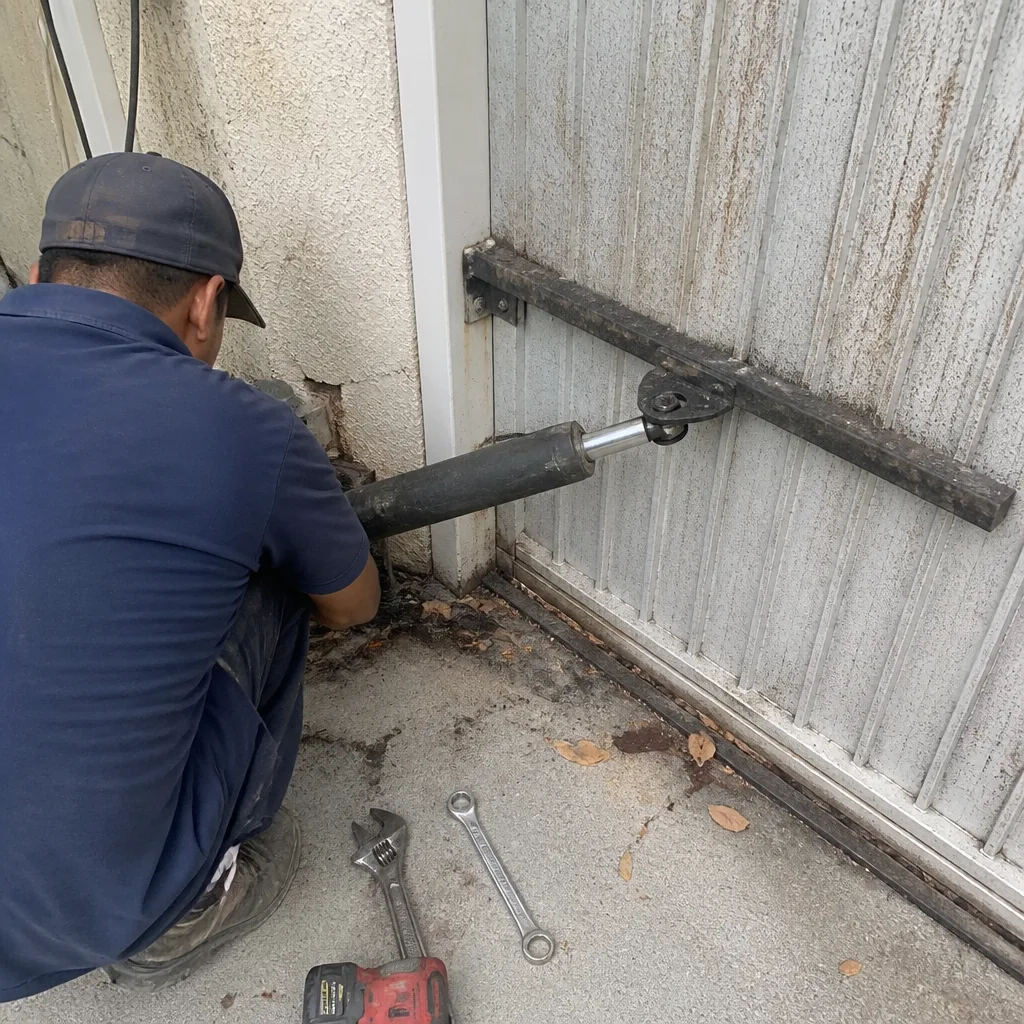 Before
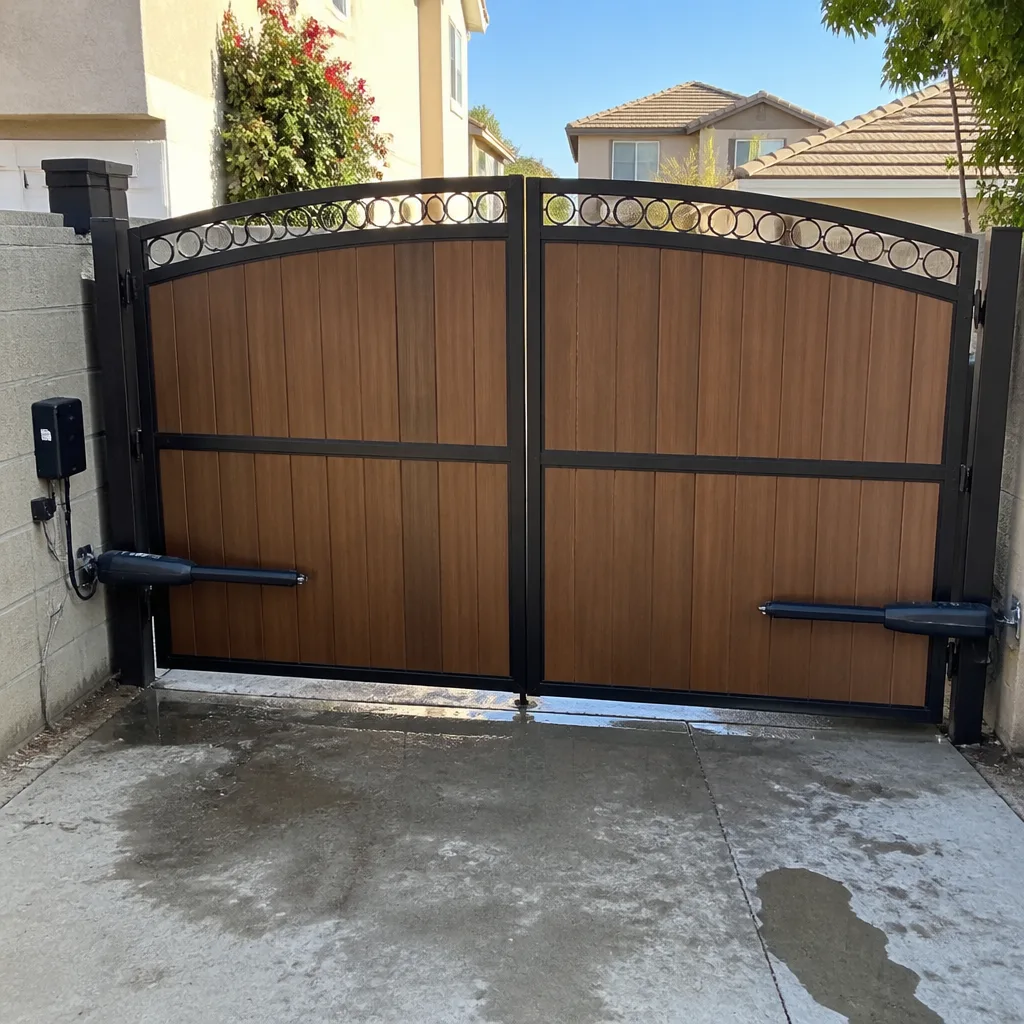 After
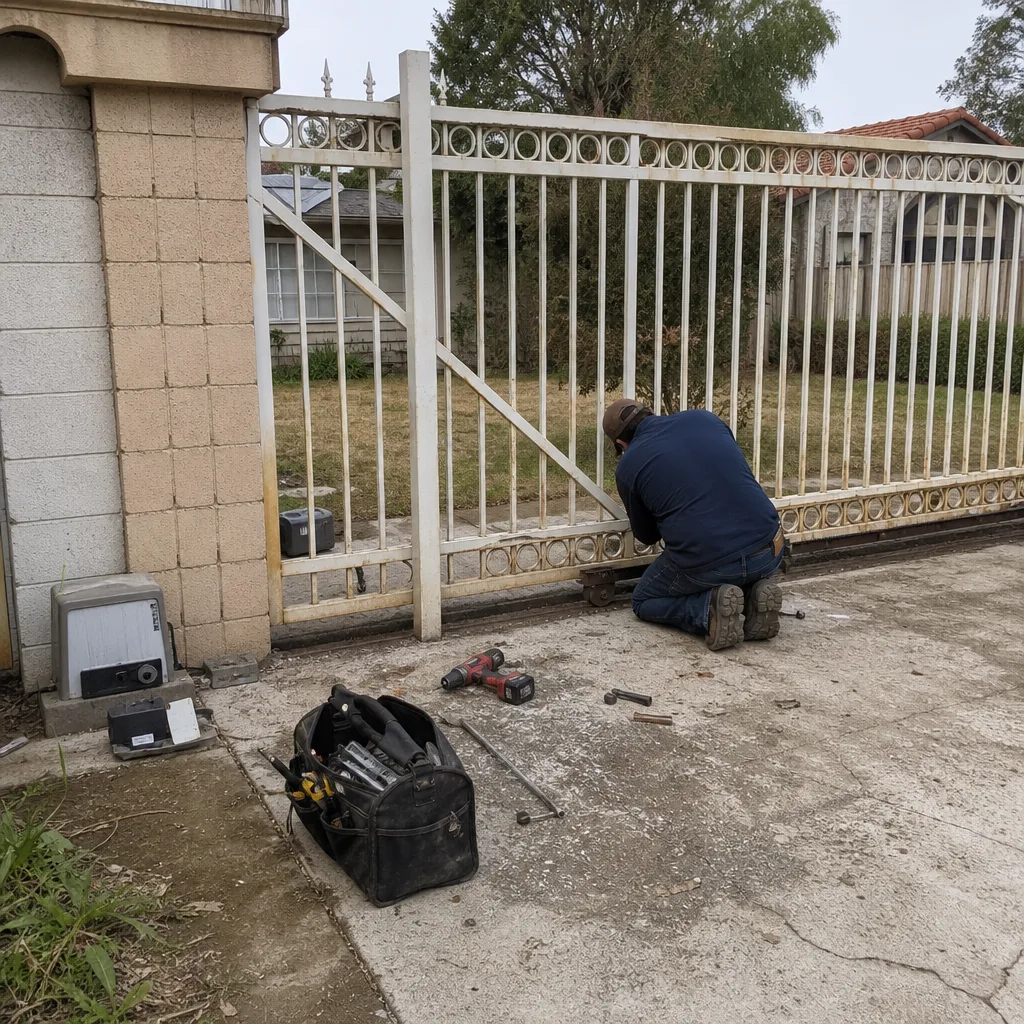 Before
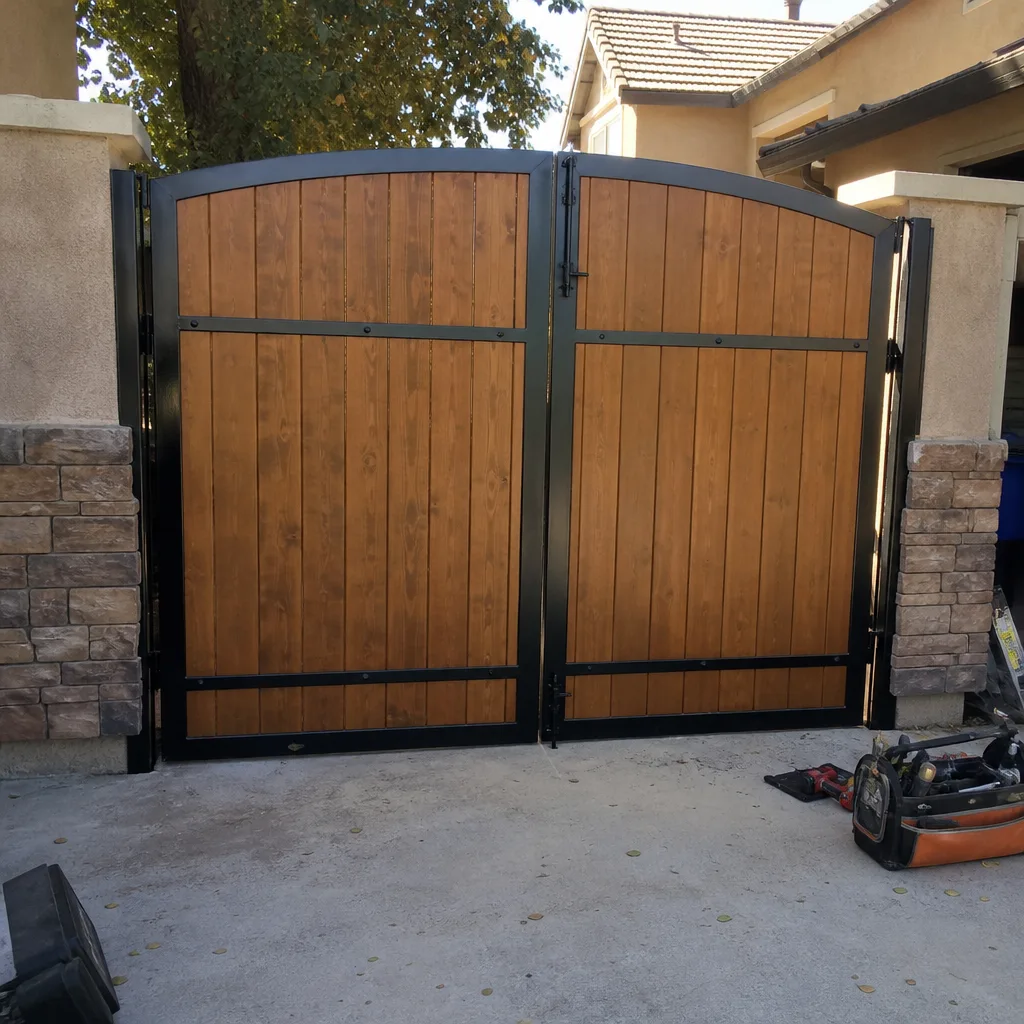 After
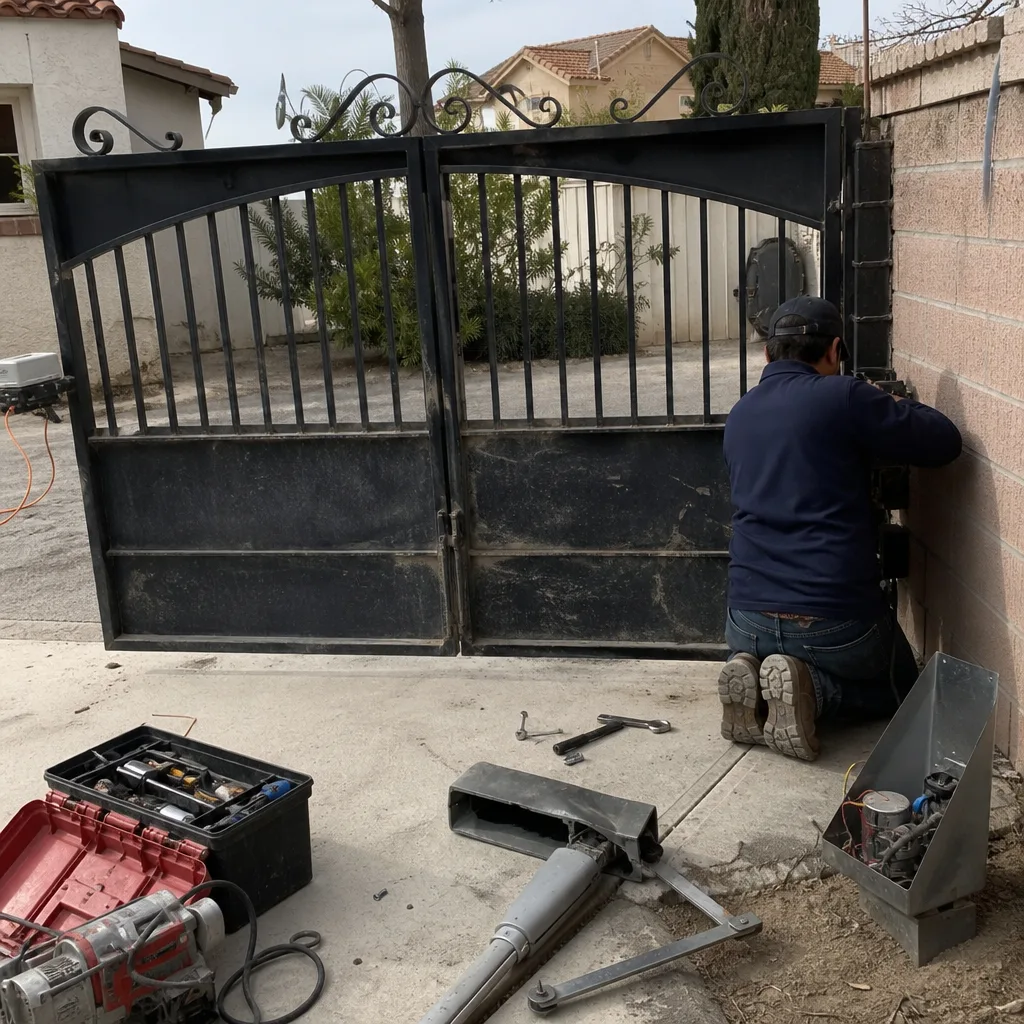 Before
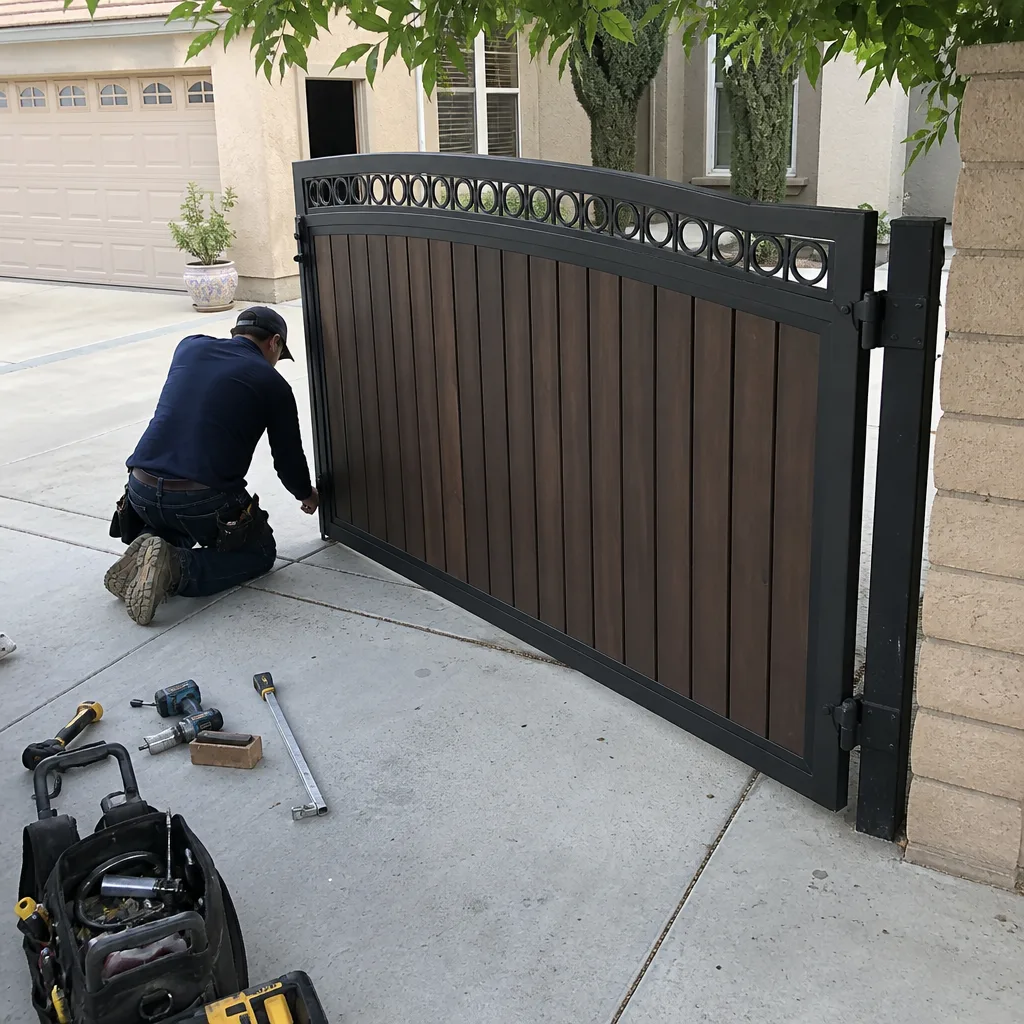 After