
Last updated November 2, 2026
 Wrought iron
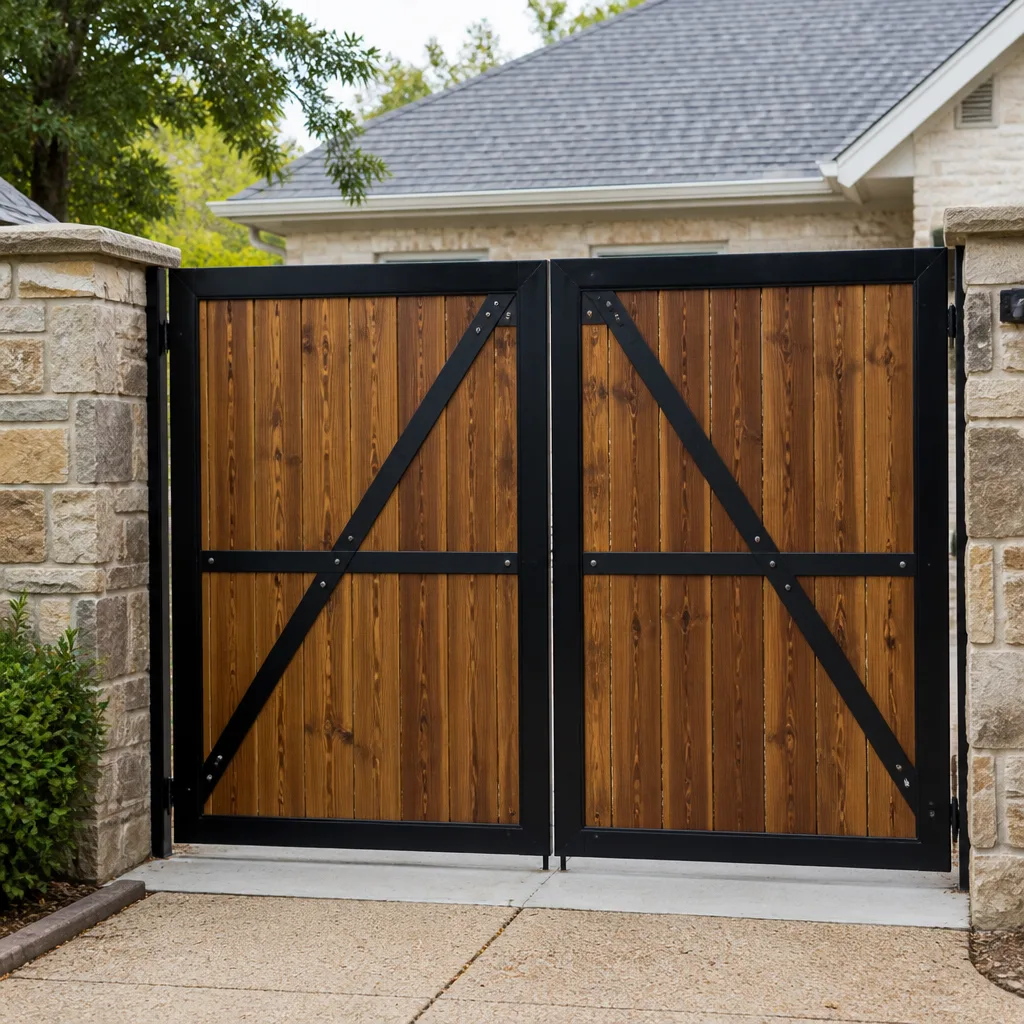 Wood & steel frame
 Farm & ranch
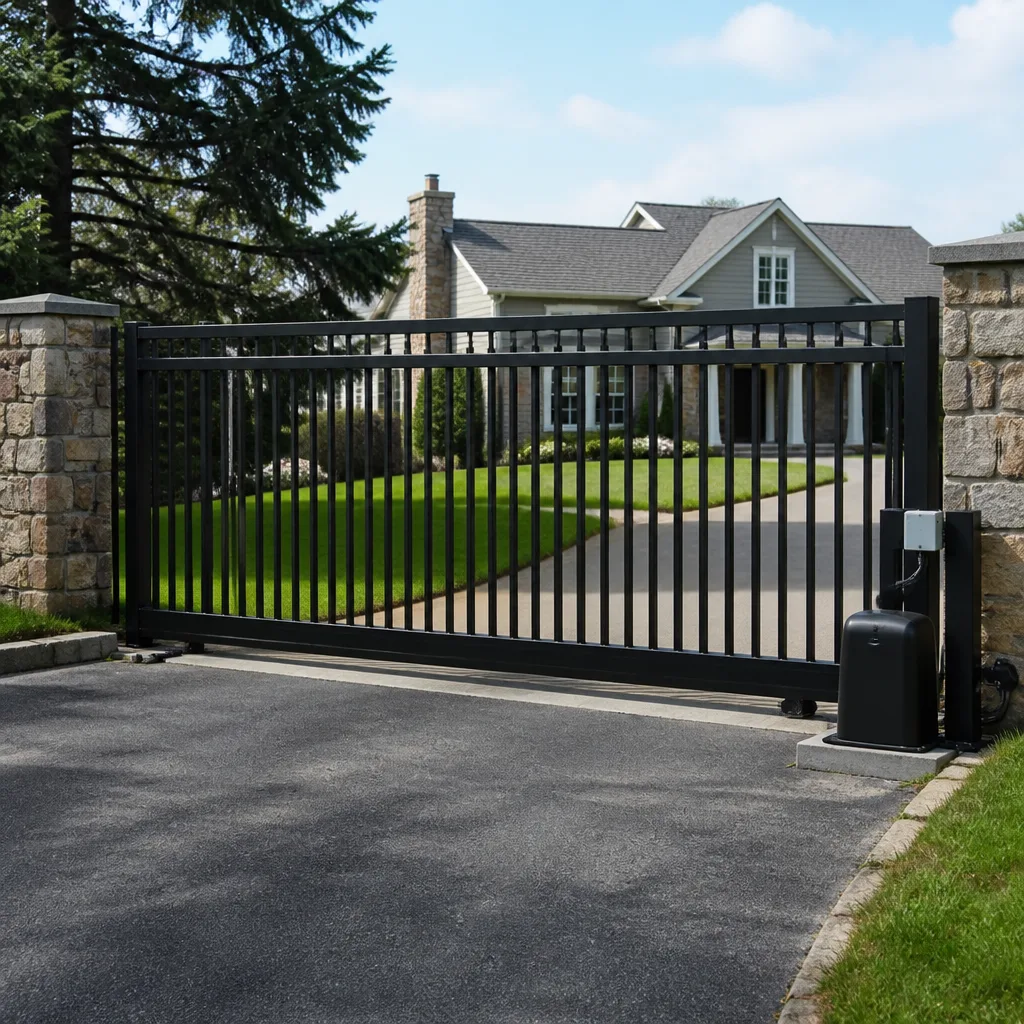 Sliding driveway gates
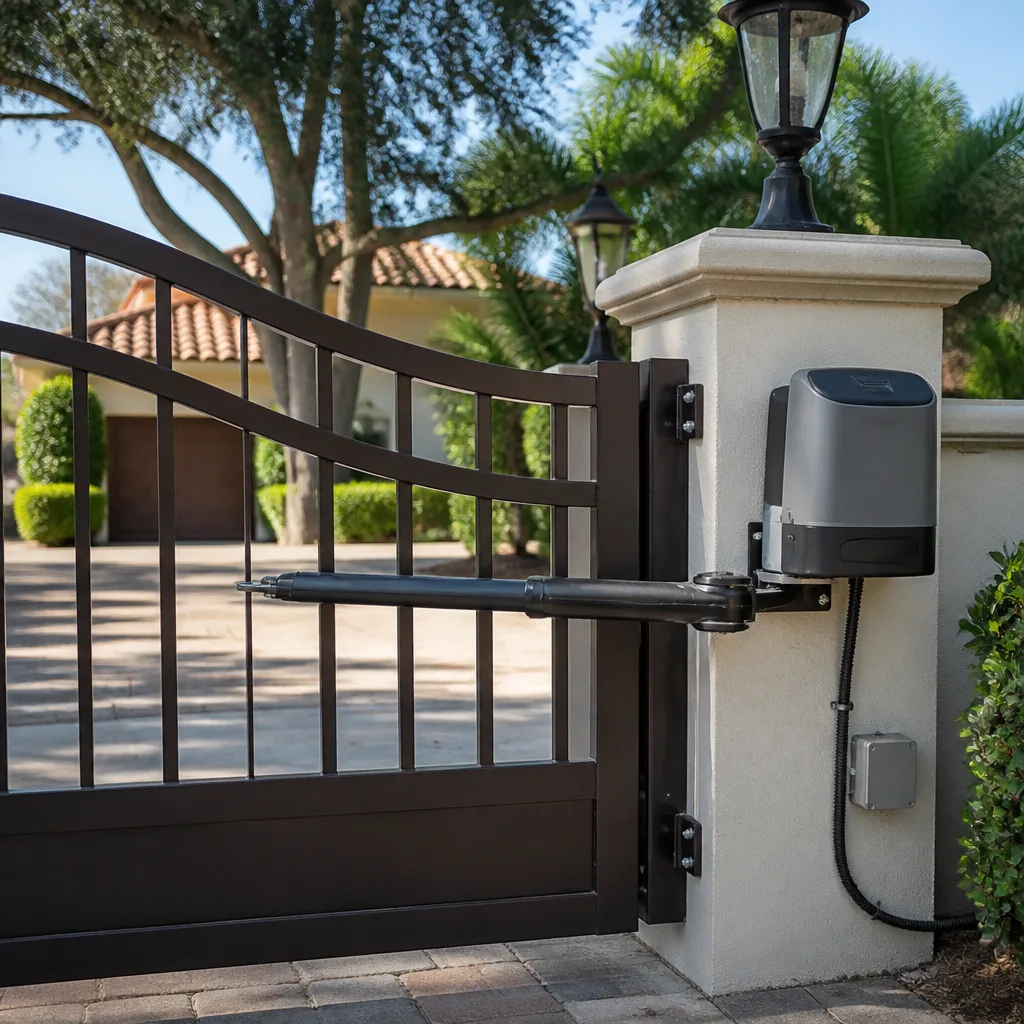 LiftMaster operators
Free on-site gate assessment - hinges, posts, and your LiftMaster or Nice gate operator checked before anything is quoted
The assessment is free and the quote is the invoice.
Get your free estimateGate Repair Emergency Preparedness Guide for Lancaster Homes
The worst time to learn where your gate’s manual release is located is at 11 PM when the power is out and you need to get your car in. In Lancaster, where LADWP outages during heat events can stretch for hours, that scenario is not hypothetical. We’ve responded to enough calls across the Antelope Valley to know that most gate emergencies follow a predictable pattern: power failure, wind damage, vehicle impact, or ground shift after seismic activity. This guide is built for the homeowner who would rather spend 30 minutes preparing now than spend 72 hours waiting for a service slot while their property sits unsecured. You’ll learn exactly which triggers cause gate failures in Lancaster, how to prepare for each one, and what to do in the first critical minutes when your gate stops cooperating. By the end, you’ll have a clear plan, the right tools, and the knowledge to keep your family safe and your property secure even when your gate isn’t working.
Quick Answer
Lancaster gate emergencies are overwhelmingly caused by four predictable triggers: power outages, Santa Ana wind damage, vehicle strikes, and post-earthquake ground shift. A homeowner who knows how to operate their gate’s manual release, keeps a small emergency kit on hand, and has a plan for securing a stuck-open gate can avoid being locked out or left exposed while waiting for repair service. This guide covers the specific preparations that matter most for Lancaster homes.
Styles & brands we work with
- Wrought iron
- Wood & steel frame
- Farm & ranch
- Sliding driveway gates
- LiftMaster operators
Table of Contents
- Know Your Operator: Manual Release Procedures for the Big Five
- The Lancaster Gate Emergency Kit: What to Have Ready
- Lancaster-Specific Emergency Triggers: Wind, Impact, and Ground Shift
- Security Protocol for a Gate Stuck Open
- Keypad Overrides and Temporary Access for Deliveries and Caregivers
- Power Outages and Your Gate: What Fails First and Why
- What You Can Safely Check Yourself (and What You Shouldn’t Touch)
- Common Mistakes to Avoid
- When to Call a Professional
- Frequently Asked Questions
Know Your Operator: Manual Release Procedures for the Big Five
Every automated gate has a manual release mechanism, but the location and operation differ significantly between brands. In Lancaster, the five operators we see most often on residential properties are LiftMaster, Viking, FAAC, Elite, and B&D. If you wait until the power fails to figure out how yours works, you’ll be fumbling in the dark with a flashlight in your teeth. Test your manual release quarterly. It takes two minutes and costs nothing. Here’s what you need to know for each brand.
LiftMaster
LiftMaster swing and slide gate operators typically use a keyed manual release located on the side or top of the operator housing. Insert the key, turn it a quarter-turn counterclockwise, and the motor disengages from the drive train. On slide gates, you can then push the gate along its track by hand. The gate will move slowly; that’s normal. On swing gates, push near the hinge side to reduce strain on the arm. LiftMaster’s residential line, including the LA400 and LA500 series, uses this same basic key-release design.
Viking
Viking operators, common on Lancaster properties with heavier ornamental iron gates, often use a T-handle or lever-style release rather than a key. Locate the release handle near the bottom of the operator housing. Pulling it disengages the gearbox. Viking gates can be heavy, so use two hands when manually moving the gate. If you have a Viking F-1 or G-5 series, the release mechanism may require a firm, steady pull rather than a sharp jerk.
FAAC
FAAC operators, frequently installed on commercial and high-end residential gates in Lancaster, typically require a specialized key that ships with the unit. If you don’t have it, you can’t release the gate manually, period. This is a critical preparation point: if your gate uses a FAAC operator, find that key today. Tape it to the inside of a kitchen cabinet or keep it in your emergency kit. FAAC’s 400 and 760 series both use keyed releases. Without the key, a technician will have to disassemble part of the operator to manually move the gate, which adds time and cost.
Elite
Elite gate operators often use a pull-chain or cable release that hangs from the operator housing. Pull down firmly and the motor disengages. Elite’s residential line is designed for DIY-friendly homeowners, which means the release tends to be accessible and straightforward. The trade-off: it can also be triggered accidentally if the chain snags on something. Check that the chain hangs freely and isn’t wrapped around the operator housing.
B&D
B&D operators, popular on mid-range residential gates in Lancaster, generally use a keyed release similar to LiftMaster’s design. The key fits into a cylinder on the face of the operator. Turn the key and pull outward to disengage. B&D’s EasyRoller and Controll-A-Door lines have slightly different key positions, but both use the same mechanical principle.
The consistent thread across all five brands: the manual release requires either a key, a handle, or a chain pull, and if you don’t know where it is before the emergency, you won’t find it during one. Our technicians at Electric Gate Repair in Lancaster regularly encounter homeowners who have owned their gate for years and never located the release. Don’t be that homeowner.
The Lancaster Gate Emergency Kit: What to Have Ready
The first 30 minutes of a gate failure decide whether the situation is an inconvenience or a security crisis. A small kit stored in a known location, garage shelf, laundry room cabinet, or mudroom drawer, can make the difference between a controlled response and chaos. Here’s what we recommend based on the failures we see most often in Lancaster homes.
- Manual release key or tool: If your operator uses a keyed release (LiftMaster, FAAC, B&D), keep it labeled and accessible. Don’t bury it in a drawer of miscellaneous keys.
- Heavy-duty work gloves: Gates collect dust, grease, and sometimes bird droppings. Your hands will also thank you when manually moving a cold metal gate in January.
- Flashlight or headlamp: Gate failures happen at night more often than you’d expect. A headlamp keeps both hands free for the manual release.
- Zip ties and duct tape: Temporary securing of loose cables, sagging chain, or a rattling bracket. Not a permanent fix, but enough to prevent further damage overnight.
- Gate Repair Lancaster’s phone number: Store (855) 341-7657 in your phone under “Gate Repair” so you’re not searching for a number while standing outside in the dark. We’re local to Lancaster and know the brands on your property.
- Photo of your gate and operator model: When you call for service, a photo of the operator’s model plate saves time. Text it to us and we’ll know exactly what parts to bring.
- Padlock and chain: If your gate is stuck partially open and you need to leave the property, a chain and padlock provide temporary security until a technician arrives.
This kit costs under $50 to assemble and takes 15 minutes. The homeowners who have it ready call us calm. The ones who don’t call us frantic. The difference in outcome is enormous, and it starts with preparation, not reaction.
One more thing worth noting for Lancaster specifically: dust. The Antelope Valley’s dry, windy conditions mean gate tracks and chains accumulate grit faster than in coastal areas. Your emergency kit should include a small can of silicone lubricant. Applying it to a track or chain when the gate is laboring can buy you hours or days of function. Don’t use WD-40 for this; it attracts dust and makes the problem worse over time. Use a dry silicone spray formulated for gate tracks.
Lancaster-Specific Emergency Triggers: Wind, Impact, and Ground Shift
Lancaster has one of the highest rates of wind-related gate failures in Southern California. Santa Ana events regularly push 40 to 60 mph gusts through the Antelope Valley, and gates are among the first things to suffer. A swing gate acts like a sail in high wind. If the operator’s force settings are too low, the wind simply overpowers the motor and the gate stops mid-swing. If the settings are too high, the motor burns out trying to fight the gust. Both outcomes leave you with a gate that won’t budge. After a major wind event, check your gate’s hinges, mounting brackets, and the operator arm for signs of stress. Hairline cracks in weld points are common and only worsen with each subsequent gust.
Vehicle strikes are the other leading cause of gate failures in Lancaster. We see it constantly: a delivery truck backs into a gate, a teenager misjudges the turn into the driveway, or a visitor assumes the gate will open faster than it does. The damage isn’t always obvious. A gate that still opens but scrapes the ground or shudders during travel has likely sustained structural damage that will fail completely within weeks. If your gate has been struck, even lightly, have it inspected. The cost of ignoring a bent hinge or cracked weld is a full gate replacement later. A thorough Gate Repair in Lancaster inspection catches these issues before they strand you.
The Antelope Valley sits in a seismically active region. Earthquakes, even small ones, shift the ground under gate posts and break the precise alignment that automated gates require. After any noticeable quake, check for these signs: the gate no longer reaches the closed position cleanly, the gap at the lock has widened or narrowed, or the gate scrapes the ground where it didn’t before. Ground shift of even a quarter inch can throw a slide gate’s track out of parallel and cause the wheels to bind. Homeowners who address alignment issues early avoid more expensive repairs down the line, and if the damage is severe enough, a Gate Installation in Lancaster consultation may be the more cost-effective path.
Security Protocol for a Gate Stuck Open
A gate stuck open is a more serious security problem than a gate stuck closed. The closed gate is an inconvenience; the open gate is an open invitation. Lancaster properties with long driveways and limited street visibility are especially vulnerable. Here’s the protocol we recommend, in order.
- Brace the gate physically if possible. If the gate is partially open and too heavy to move by hand, don’t force it. But if you can push it closed using the manual release, do so. A closed gate, even without power, looks like a functioning barrier to most opportunistic intruders.
- Secure with a chain and padlock. For gates that won’t stay closed on their own because the lock mechanism is damaged, loop a chain through the gate and around a sturdy post or the gate’s own frame. This is where your emergency kit pays for itself.
- Block the gap if the gate is damaged open. If the gate has been struck and can’t close, park a vehicle across the opening if your driveway layout allows it. Not ideal, but it blocks vehicle access.
- Notify anyone who needs access. Caregivers, house cleaners, dog walkers, delivery drivers. Anyone with a keypad code or clicker needs to know the gate is inoperable and how to reach you.
- Call for repair immediately. A gate stuck open is a liability. The longer it stays that way, the more likely you are to have a problem. Call (855) 341-7657 and we’ll dispatch a Lancaster technician.
The critical mistake homeowners make with a stuck-open gate is attempting a makeshift mechanical fix. We’ve seen gates propped open with cinder blocks, tied with bungee cords, and wedged with landscaping timber. These hold the gate in place temporarily but create new damage: bent wheels, warped tracks, cracked hinges. The goal in an emergency is to secure the property, not to repair the gate. Leave the repair to someone who knows the system.
Keypad Overrides and Temporary Access for Deliveries and Caregivers
When your gate stops working, the people who normally access your property, the UPS driver, the home health aide, the dog walker, suddenly can’t get in. For Lancaster homeowners, this is often the most stressful part of a gate failure. You’re not just managing your own access; you’re managing everyone else’s. The keypad override is your best tool here, and most homeowners don’t know it exists.
Most residential gate keypads in Lancaster have a programming mode that allows temporary codes. A temporary code can be set to expire automatically after a set number of uses or a specific time period. If you’re expecting a delivery or a caregiver while your gate is inoperable, set a temporary code and give it to them by phone or text. When they arrive, they enter the code and, assuming the gate’s receiver still has power, the gate opens. This works even if the gate is in manual mode on some systems, though not all. The keypad override doesn’t move the gate if the motor or power supply is dead, but it works when the failure is mechanical, like a stripped gear or a burned-out limit switch.
For gates that won’t open under any circumstances, you need a plan for meeting people at the property line or providing an alternate access point. A pedestrian gate, side door, or walkway gate that operates manually is your backup. If your property doesn’t have a pedestrian gate, and many Lancaster homes with long driveway gates don’t, you’ll need to either meet the person at the gate or leave the gate unsecured temporarily with a clear plan to secure it afterward.
Communication is the skill that matters most here. Text the person with your gate status: “Gate is down, call me when you arrive and I’ll meet you at the gate.” This 30-second message prevents the confusion of a driver standing outside a non-operating gate for ten minutes wondering what to do. It also prevents the more serious scenario of someone forcing the gate open and causing damage.
For emergency services, the rules are different. Fire and police departments have override protocols for gated properties, and most use a siren-activated sensor or a universal key access. But these systems only work if they’re maintained. If your gate has a fire access system, test it quarterly. A non-functioning fire access gate can delay emergency response by critical minutes, and in Lancaster, where response times already stretch longer in the outlying areas, those minutes matter.
Power Outages and Your Gate: What Fails First and Why
Lancaster’s summer brings rolling outages during heat events, and winter brings outages from wind-related downed lines. Your gate’s response to a power outage depends on whether it has battery backup. If it does, and the battery is healthy, the gate continues operating normally through the outage. If it doesn’t, or the battery has failed, the gate goes dark. Here’s what typically fails in order.
First, the keypad and any hardwired access controls lose power. Your clicker may still work if the gate’s receiver has battery backup, but the keypad on the post goes dead. This is the moment homeowners realize how dependent they are on the keypad.
Second, the operator’s logic board shuts down. The gate freezes in whatever position it was in when power cut. If it’s closed, you’re locked out. If it’s open, you’re exposed. There’s no in-between.
Third, and most critically, the battery backup, if present, drains. A healthy battery typically provides 10 to 30 open-close cycles depending on the operator and the gate’s weight. Once it’s dead, the gate is dead.
The preparation here is straightforward: know whether your operator has battery backup, test it twice a year, and replace the battery every 3 to 5 years regardless of whether it still holds a charge. In Lancaster’s heat, batteries degrade faster than coastal locations. A battery that’s five years old is a ticking clock, not a reliable backup.
If your gate doesn’t have battery backup and you want it, installation is typically a straightforward addition for operators that support it. For operators that don’t, a new operator with backup capability is the more expensive but ultimately more reliable path. Gate Repair Lancaster home resources can walk you through which option makes sense for your system and your budget.
What You Can Safely Check Yourself (and What You Shouldn’t Touch)
Some gate maintenance is safe for a homeowner with basic tools and common sense. Other tasks are genuinely dangerous and should be left to a technician. Knowing the difference saves you money and keeps you out of the emergency room. Gate operators are powerful machines. A swing gate operator can exert hundreds of pounds of force, enough to crush a hand or pin a child. Treat the operator with the same respect you’d give a table saw.
Safe to check yourself:
- Track condition: look for debris, rocks, or packed dust in the track. Clear it with a brush, not your fingers.
- Chain tension: a sagging chain on a slide gate is visible and often fixable with a simple adjustment, but only if you know the manufacturer’s spec. If you don’t, leave it.
- Lubrication: applying silicone lubricant to tracks and chains is safe and helps prevent premature wear.
- Hinge wear: visually inspect hinges for cracks, rust, or loosening. Don’t remove or replace them yourself; just identify the problem.
- Photo eye alignment: if your gate reverses immediately after closing, the photo eyes may be misaligned. Gently reposition them until the indicator light shows alignment.
Leave to a professional:
- Spring replacement: swing gates use heavy torsion springs that can cause serious injury if mishandled.
- Gearbox repair: the operator’s gearbox contains machined components under tension. Opening it voids warranties and risks damaging the motor.
- Limit switch adjustment: getting this wrong causes the gate to over-travel, damage itself, and potentially injure someone.
- Electrical wiring: any issue involving the power supply, capacitor, or control board should be handled by someone who knows what they’re doing. A capacitor holds a charge even after the power is disconnected and can deliver a painful shock.
- Vehicle damage repair: a bent gate frame or cracked weld is a structural issue. No amount of DIY effort fixes a cracked weld.
The good news for Lancaster homeowners is that gate repair technicians who specialize in this exact work are available locally. You don’t have to figure this out yourself. Electric Gate Repair in Lancaster covers everything from brand-specific diagnostics to full operator replacement, and we’ve seen every failure mode the Antelope Valley can produce.
Common Mistakes to Avoid
- Not testing the manual release before an emergency. The manual release is your only guaranteed access during a power failure. If you’ve never used it, you don’t know if it works. Test it quarterly.
- Using the wrong lubricant. WD-40 and similar penetrating oils attract Lancaster’s fine dust and turn your gate track into grinding paste. Use only dry silicone lubricant.
- Ignoring minor impact damage. A gate that still functions after a vehicle strike is not fine. Hairline cracks and bent brackets fail suddenly, usually at the worst possible moment.
- Forcing a gate that’s binding. If the gate is struggling against the operator, manually forcing it only adds damage. Disengage the operator and move the gate by hand to feel for resistance, then call for service.
- Relying on a dead battery backup. Battery backups fail silently. A gate that worked through last year’s outage may not survive this year’s if the battery has aged out. Test it twice a year.
- Making “temporary” fixes permanent. The zip tie holding your gate’s wire loom together is not a repair. Temporary fixes that become permanent are how small problems become full system failures.
- Not having a professional gate company’s number saved. In an emergency, you’ll Google “gate repair Lancaster” and get a list of general contractors who gate repair as a side service. Save the number of a dedicated gate specialist now, before you need it.
When to Call a Professional
Some gate problems can wait; others can’t. Call immediately if your gate has been struck by a vehicle and shows any sign of structural damage, if the operator makes grinding or clicking sounds while running, if the gate won’t stay in position or drifts on its own, or if the keypad and remote both stop working simultaneously with no obvious cause. Call this week if your gate is running slower than normal, if the safety reversal system doesn’t respond, or if the gate has started scraping the ground. Call for an inspection if your gate is more than five years old and has never had one. Gate Repair Lancaster offers free estimates in Lancaster. Call (855) 341-7657 and a technician who knows your exact brand, whether it’s a Mighty Mule residential unit or a commercial-grade FAAC, will assess the problem and give you a clear picture of what it will take to fix it.
Frequently Asked Questions
Check for power. If your keypad is dark and your clicker does nothing, the gate has no power. Locate your manual release, disengage the operator, and manually move the gate to the position you need. Then call (855) 341-7657 to schedule service. The manual release is the first step in every gate emergency.
Find the manual release mechanism on your operator: a key for LiftMaster, FAAC, and B&D; a T-handle or lever for Viking; or a pull-chain for Elite. Disengage the operator, then push the gate by hand. Move slowly and use two hands if the gate is heavy. This works for both swing and slide gates.
Gate Repair Lancaster maintains local technicians in the Antelope Valley and can often respond same-day for security-critical failures like a gate stuck open. For non-emergency issues, we’ll schedule a visit that fits your calendar. Call (855) 341-7657 and describe your gate’s behavior; we’ll tell you honestly whether it’s urgent or can wait.
Costs vary by system and the nature of the failure. A simple limit switch adjustment might run under $150, while a full operator replacement can exceed $2,000. Emergency service calls often carry a dispatch fee, but that varies by time of day and distance. Gate Repair Lancaster provides upfront pricing on all work; no surcharge on parts. Call (855) 341-7657 for an exact quote, which is free, and you’ll know the cost before any work begins.
Wind damage to a gate is typically covered under the dwelling portion of your homeowners policy, but the deductible often exceeds the repair cost for minor damage. Vehicle damage is covered by the driver’s auto insurance in most cases. The claim process and documentation requirements are worth reviewing with your agent before you need them, and we can provide the damage assessment and repair estimates you’ll need to file.
A full Gate Installation in Lancaster includes site assessment, demolition and removal of the old gate if needed, installation of the gate and operator, power run to the operator, safety edge installation, keypad and remote programming, and final testing. We quote the complete scope before work begins, and we walk you through every component so you know exactly what you’re paying for.
The Bottom Line
Gate emergencies in Lancaster are not random events. They follow predictable triggers, and a homeowner who understands those triggers and prepares for them is not at the mercy of a 72-hour service delay. Know your manual release. Test it quarterly. Keep a small emergency kit with the specific items that matter for your operator brand. Know what to do when the power fails, when the wind damages your gate, or when a vehicle strikes it. And have a dedicated gate specialist’s number saved before the emergency, not after. The 30 minutes you spend preparing today is the difference between a controlled response and a security crisis. That’s the whole point of this guide, and it’s how we’d want every homeowner in Lancaster to approach gate ownership.
Written by the team at Gate Repair Lancaster, serving Lancaster since 2015.
If your gate has stopped working, is behaving erratically, or needs a professional inspection, call (855) 341-7657 for a free estimate. We work on your exact brand, from Mighty Mule to FAAC, and we’re gate specialists, not generalists.
See the difference
 Before
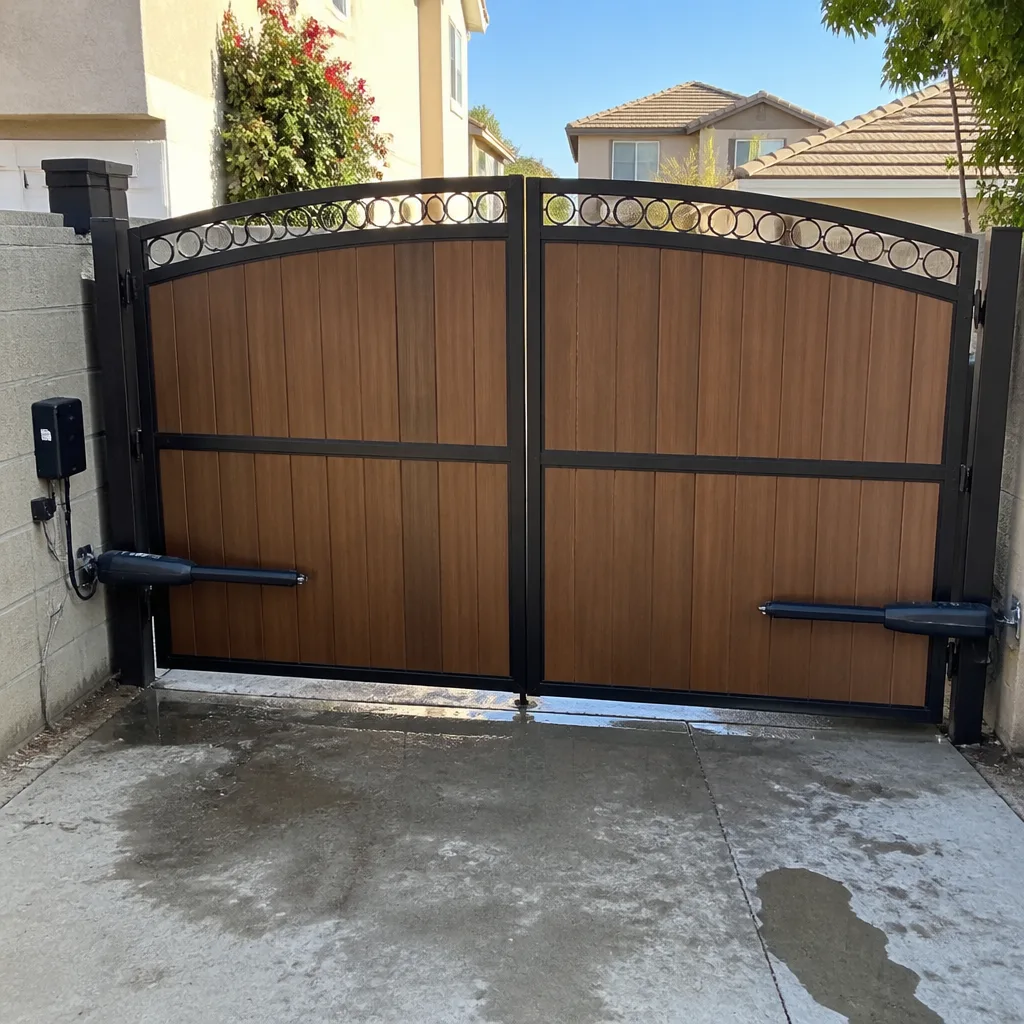 After
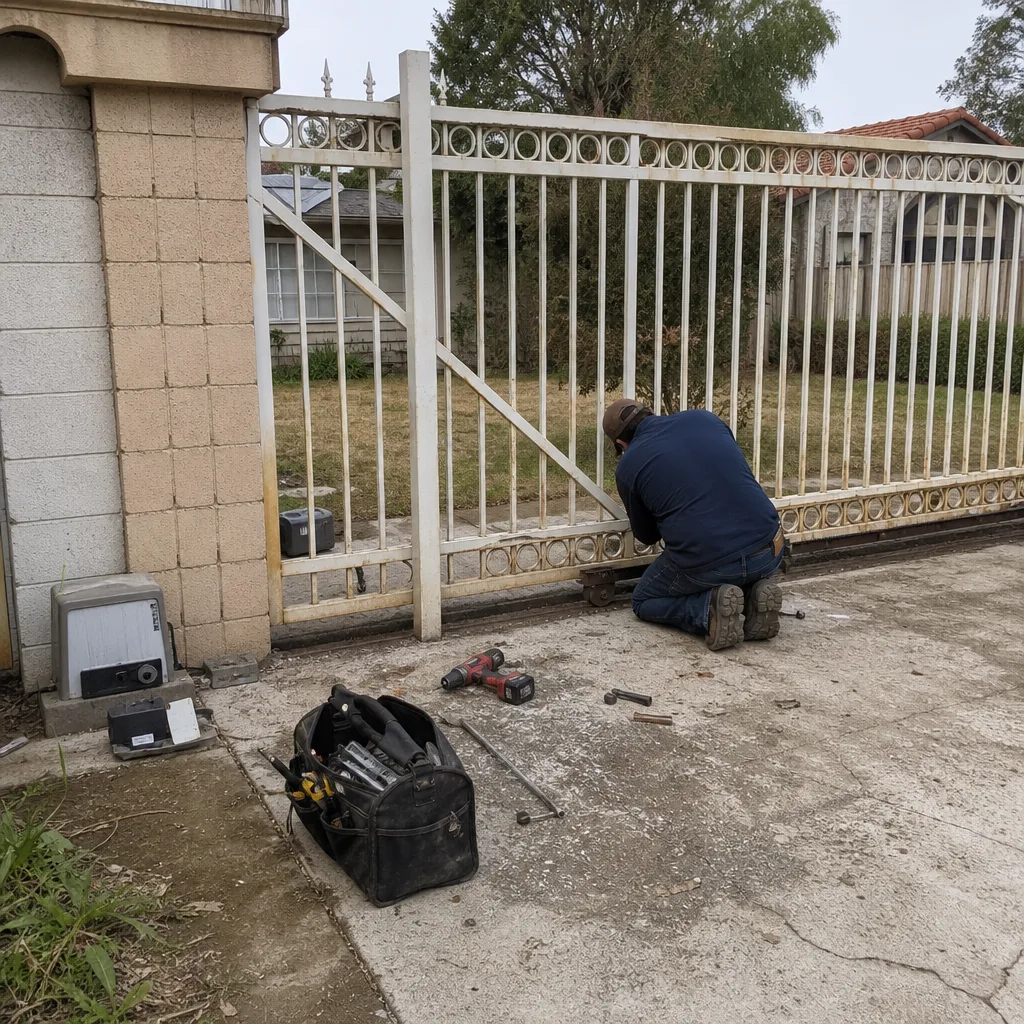 Before
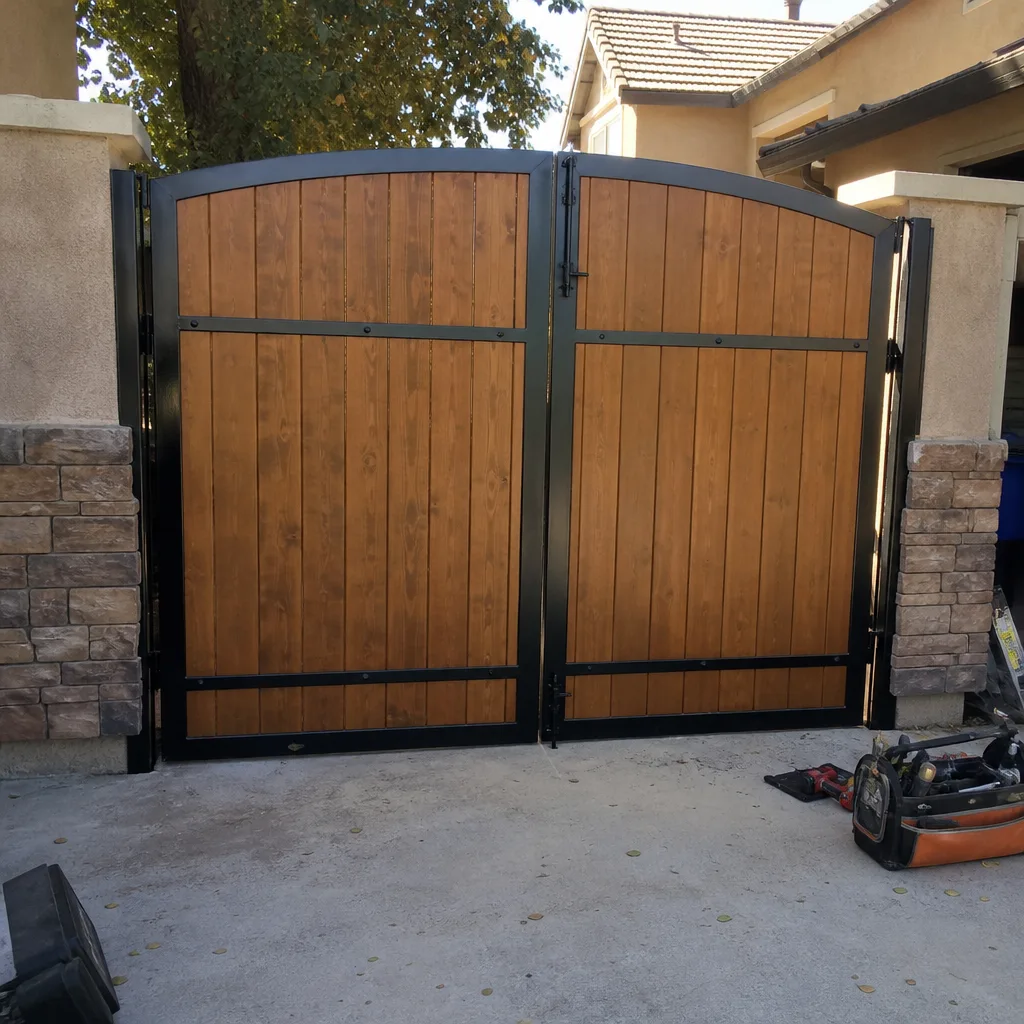 After
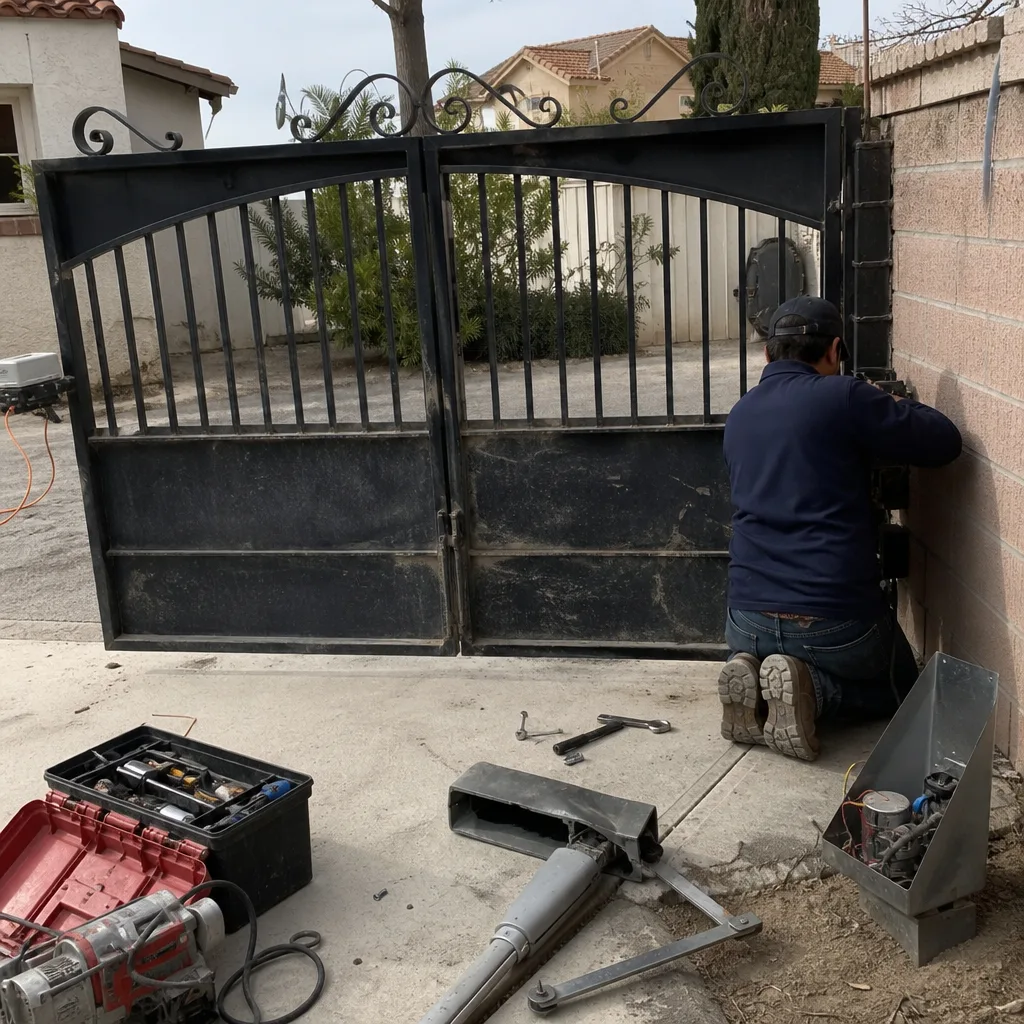 Before
 After