
Last updated November 2, 2026
 Wrought iron
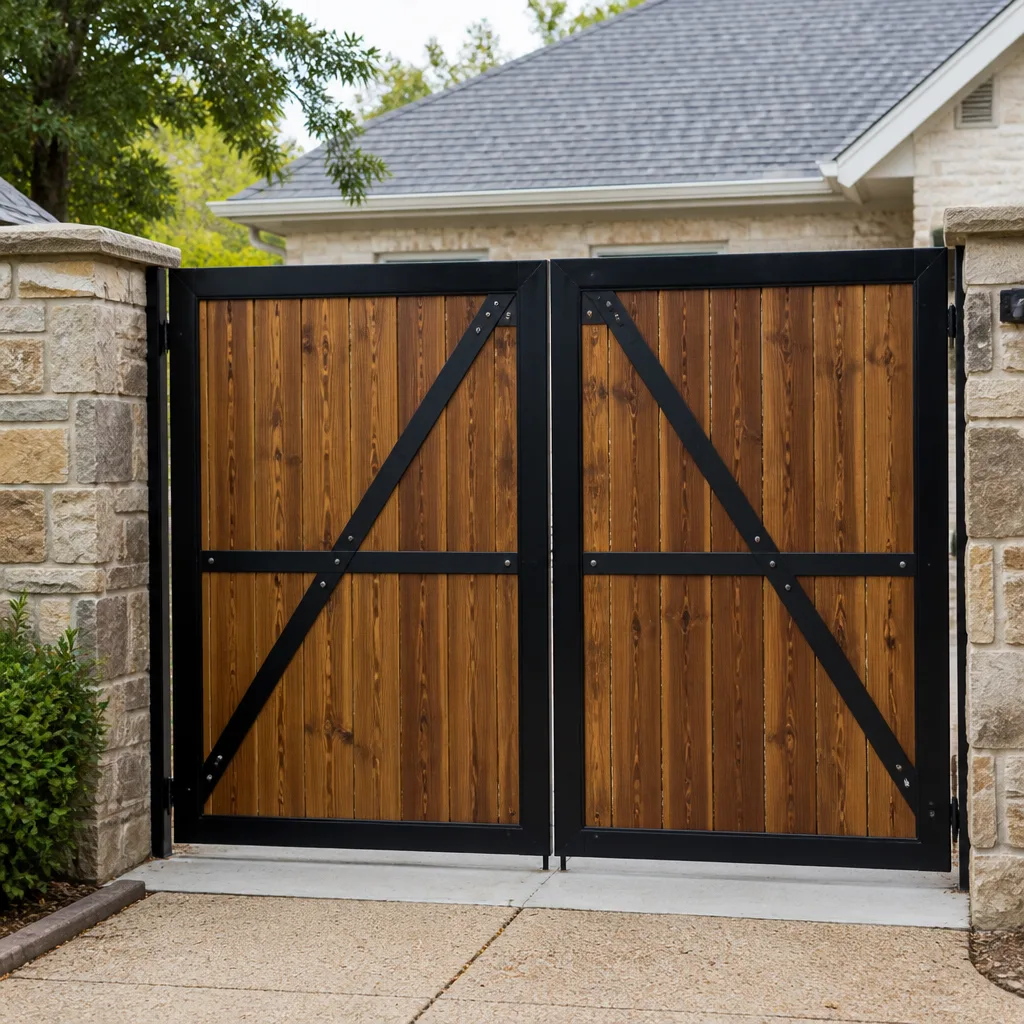 Wood & steel frame
 Farm & ranch
 Sliding driveway gates
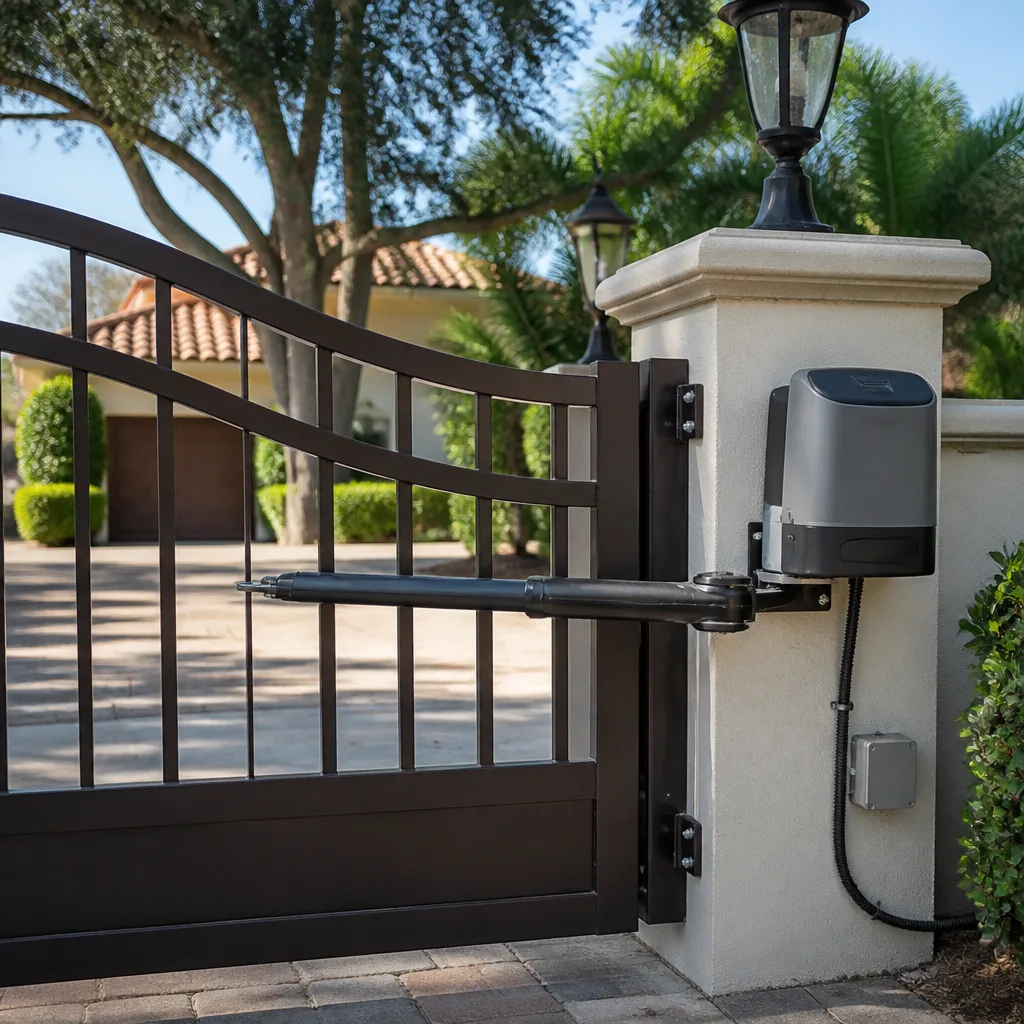 LiftMaster operators
Free on-site gate assessment - hinges, posts, and your LiftMaster or Nice gate operator checked before anything is quoted
The assessment is free and the quote is the invoice.
Get your free estimateGate Repair Maintenance Checklist for Lancaster Homeowners
Here’s a fact most gate maintenance guides won’t tell you: the manufacturer’s recommended service intervals for your gate were almost certainly written for a climate that doesn’t exist in Lancaster, CA. A gate in coastal San Diego might go six months between lubrication cycles. A gate in Lancaster deals with 100°F-plus summer heat, single-digit humidity, and wind-driven dust that works its way into every bearing, hinge, and circuit board. That means your maintenance calendar needs to run roughly two to three times faster than the manual suggests. This checklist is built specifically for the Antelope Valley high desert, and it covers the tasks that actually prevent gate failures here, not the generic advice that works everywhere else.
Styles & brands we work with
- Wrought iron
- Wood & steel frame
- Farm & ranch
- Sliding driveway gates
- LiftMaster operators
Quick Answer
Lancaster homeowners should inspect their gate monthly, lubricate moving parts every 2 – 3 months (not the 6-month interval most manuals recommend), deep-clean photocells and track surfaces quarterly, and schedule a full mechanical and electrical inspection twice per year. In our experience, the three failures we see most often in Lancaster are dust-seized bearings, sun-damaged capacitor boards, and misaligned posts from caliche soil heave. All three are preventable with the right maintenance at the right interval.
Table of Contents
- Why Lancaster’s Climate Changes Your Maintenance Schedule
- Monthly Gate Maintenance Checklist
- Quarterly Gate Maintenance Checklist
- Annual Gate Maintenance Checklist
- Lubrication: What to Use and How Often in High-Desert Conditions
- Caliche Heave: The Silent Gate Killer Most Checklists Ignore
- Battery Backup and Surge Protection for Lancaster’s Storm Season
- Photocell and Loop Detector Cleaning in a Dust Environment
- Common Mistakes to Avoid
- When to Call a Professional
- Frequently Asked Questions
- The Bottom Line
Why Lancaster’s Climate Changes Your Maintenance Schedule
Lancaster sits in the high desert at roughly 2,300 feet of elevation. Summer daytime temperatures regularly exceed 100°F from June through September. Humidity frequently drops below 15 percent. And when the wind picks up, which is often, it carries fine alkaline dust from the Antelope Valley floor directly into your gate’s mechanical and electrical components.
Here’s what that means in practical terms. Standard grease and oil products break down faster in extreme heat. Rubber seals crack sooner in dry, UV-intense conditions. Dust that would be a minor nuisance in a humid climate becomes an abrasive paste when it mixes with whatever lubricant remains. Circuit boards and capacitors, especially in gate operator control boxes, fail prematurely when they run hot for months on end.
We see the same pattern repeatedly. A homeowner follows the manufacturer’s manual, services the gate every six months, and then calls us when a bearing seizes or a control board burns out. The manual wasn’t wrong, but it wasn’t written for Lancaster. Our recommendation is to treat the manufacturer’s schedule as a starting point and accelerate the critical tasks by at least 2x, sometimes 3x depending on your specific location within the valley. Homes on the west side of Lancaster near Quartz Hill or along Avenue K tend to see more wind-driven dust than homes closer to the center of town. If your property is exposed to open desert on one side, you’ll feel that in your gate’s maintenance needs.
For a deeper look at how our repair approach accounts for local conditions, see our Gate Repair in Lancaster page.
Monthly Gate Maintenance Checklist
These are the tasks you should do every 30 days, or after any significant wind event. Most of them take under 10 minutes. The goal is to catch problems before they become failures.
- Visual inspection of the gate leaf. Stand back and look at the gate from the closed position. Is it level? Is there a gap at the top or bottom that wasn’t there last month? A sagging gate puts stress on hinges and can eventually bind the operator.
- Listen to the operator during a full open-and-close cycle. New grinding, squealing, or hesitation sounds are early warning signs. A healthy Gate Repair Lancaster-maintained gate should sound consistent from start to finish.
- Clear debris from the track and bottom rail. Tumbleweeds, palm fronds, and wind-blown trash accumulate faster than you’d think. In Lancaster, one good windstorm can deposit enough debris to obstruct a slide gate in a single afternoon.
- Check the gate’s physical stops and limit settings. Open and close the gate fully. Does it stop in the same place each time? If the gate overtravels or reverses before fully closing, the limits may be drifting.
- Test the safety reversal mechanism. While the gate is closing, place a firm object in its path (a trash can works). The gate should reverse immediately. If it doesn’t, stop using the automatic function and call a professional. This is a safety device, not a convenience feature.
- Inspect wiring connections for visible damage. Look for exposed wires, chew marks from rodents (common in the Antelope Valley), or connections that have pulled loose from the operator housing. Don’t touch anything that looks compromised – photograph it and call for service.
- Verify the manual release works. Every electric gate operator has a manual release mechanism, usually a keyed lock or pull lever. Test it once a month. If you can’t get the gate to move manually, you’ll be locked out during the next power outage.
If you’re doing these checks and finding problems every single month, that’s a signal that something more fundamental needs attention. Our Electric Gate Repair in Lancaster service handles exactly these kinds of recurring issues.
Quarterly Gate Maintenance Checklist
Every three months, set aside 30 to 45 minutes for these deeper maintenance tasks. In Lancaster, quarterly maintenance is the interval where most preventable failures are caught. If you only do one thing from this entire guide, do the quarterly inspection.
- Deep-clean the photocells. Photocells are the small eye-like sensors mounted near the bottom of the gate opening on each side. In Lancaster’s dust conditions, a light film of dust builds up on the lens surfaces within weeks. Wipe them with a dry microfiber cloth and then a slightly damp cloth. Don’t use glass cleaner with ammonia – it can cloud polycarbonate lenses over time.
- Lubricate hinges, roller bearings, and pivot points. See the lubrication section below for specific product recommendations. The critical point for Lancaster: you’re lubricating four times per year minimum, not the two times most manuals suggest.
- Check all bolts, screws, and mounting hardware for torque. The thermal expansion and contraction from Lancaster’s wide daily temperature swings (often 30°F or more between day and night) loosens hardware faster than in coastal climates. A 3/8-inch ratchet and 10 minutes will catch most loose fastener issues before they cause damage.
- Inspect the chain or belt tension on slide gates. Too loose and the chain can jump the sprocket. Too tight and you accelerate bearing wear. The right tension allows about 1/4 to 1/2 inch of deflection when you press firmly in the center of the span.
- Clean out the operator housing. Dust gets inside control boxes through vents and small gaps. Use compressed air or a vacuum with a brush attachment to remove accumulated dust from circuit boards, transformers, and wiring. Do this with the power disconnected at the breaker. A dust layer acts as insulation and traps heat, which shortens component life significantly.
- Test the battery backup system. Disconnect power at the breaker and run the gate through two or three open-close cycles. If it doesn’t complete the cycles or moves noticeably slower, the batteries are aging. See the battery section below for Lancaster-specific guidance.
If you’re not comfortable with any of these tasks, or if you find something that looks wrong, we handle these inspections as part of our regular service in Lancaster. The Gate Repair Lancaster home page has more on what we cover.
Annual Gate Maintenance Checklist
Once a year, the gate needs a thorough mechanical and electrical health assessment. We recommend scheduling this in early fall, around September or October, before Lancaster’s winter wind season and before the rainy period that typically runs from November through March. Doing it in fall means your gate faces the harshest weather with fresh lubrication, tight hardware, and clean electrical connections.
- Full post and footing inspection. Check each post for plumb using a level. Look for cracks in the concrete footings or signs of soil movement around the base. This is the caliche heave check described in detail below. If you see fresh cracks or movement, mark the location and monitor monthly.
- Complete electrical system test. A professional should test amperage draw on the motor, voltage at the control board, capacitor health, and ground continuity. These tests reveal problems that visual inspection misses. For homeowners with a multimeter and experience, basic voltage checks are possible. For everyone else, this is a service call.
- Gearbox and drive mechanism inspection. Oil-filled gearboxes on operators like FAAC or BFT units need their oil level checked and, in many cases, changed. Grease-filled gearboxes should be inspected for contamination. A gearbox that runs dry in Lancaster heat is a gearbox that fails within months.
- Limit switch and safety edge calibration. Over time, limit switches drift and safety edges lose sensitivity. A full recalibration ensures the gate opens fully, closes fully, and reverses under the correct pressure threshold.
- Gate structure inspection. Look at all weld points on steel gates, especially at hinge attachment areas. Look for rust on iron gates and frame fatigue on aluminum gates. Lancaster’s dry climate slows rust compared to coastal areas, but wind-driven sand acts as a constant abrasive on painted surfaces.
- Control board diagnostic scan. Most modern gate operators from Linear, Viking, and other brands have diagnostic LED codes or display readouts. A full scan reveals stored fault codes that indicate problems that haven’t yet caused a visible failure.
For homeowners who want this annual inspection done professionally, we offer full mechanical and electrical assessments as part of our gate service in Lancaster. If you’re considering a replacement rather than continued maintenance, our Gate Installation in Lancaster page covers what a new system involves.
Lubrication: What to Use and How Often in High-Desert Conditions
This is the single most important maintenance task for any gate in Lancaster, and the one most people get wrong. The combination of extreme heat and fine dust means you need lubricants specifically formulated for high-temperature, high-abrasion environments. The WD-40 in your garage is not a lubricant. The white lithium grease you might use on a garage door is often too heavy for gate applications.
For roller bearings and hinge pins, we recommend a synthetic dry-film lubricant or a high-temperature bearing grease rated for continuous operation above 150°F. Products like DuPont Teflon Multi-Use dry film lubricant or Super Lube synthetic grease with PTFE handle Lancaster’s temperature extremes well. The key is that they don’t break down into a sticky residue when the gate surface hits 130°F or more in direct summer sun.
For chain drives on slide gates, use a dedicated chain lubricant designed for open chains, not a general-purpose oil. Chain-specific products resist flinging off and trap less dust. Apply sparingly – a heavily oiled chain in Lancaster becomes an abrasive grinding paste within weeks. Wipe off excess after application.
Here’s the lubrication schedule that works in this climate:
- Roller bearings: Every 2 – 3 months. These are the most vulnerable components on slide gates in Lancaster because dust works into the bearing races and the grease dries out in heat.
- Hinge pins on swing gates: Every 3 months. The hinge experiences the full weight of the gate leaf plus constant wind loading.
- Chain drives: Every 3 months, with a light cleaning before each application.
- Wheel tracks on slide gates: Keep clean and dry. Do not lubricate the track surface itself – this attracts dust and causes the wheels to slip. Lubricate only the wheel bearings.
- Operator gearbox oil (FAAC, BFT, Viking units): Annually per manufacturer specs, but if your gate sees heavy daily cycling (more than 20 cycles per day), check oil level quarterly and change annually regardless.
One more Lancaster-specific note: the dry air means lubricants evaporate and dry out faster than in humid climates. If you’re using an older petroleum-based product, you’ll be reapplying far more often than the can suggests. Synthetic products hold up better in high heat and low humidity.
Caliche Heave: The Silent Gate Killer Most Checklists Ignore
Caliche is a hardened layer of calcium carbonate that forms in desert soils, including much of the Antelope Valley. It’s essentially a natural concrete that sits anywhere from a few inches to several feet below the surface. When moisture gets into caliche soil, the soil expands. When it dries, it contracts. This expansion and contraction cycle doesn’t just affect the soil – it pushes against gate post footings and can slowly shift posts out of alignment.
We see caliche heave most often on properties in the eastern and southern parts of Lancaster where the soil has higher caliche content. The damage is rarely dramatic. A post shifts a quarter inch one season, another quarter inch the next. Within two years, a swing gate that once hung perfectly level now drags on the ground or binds against the latch post. The operator then works harder, draws more current, and eventually fails.
Here’s how to check for caliche heave on your own gate:
- Look for a crescent-shaped gap between the soil and the concrete footing. This gap appears when the soil expands and lifts, then contracts and leaves a void. It’s easiest to spot after a rain.
- Place a level on the gate post. The post should be plumb in both directions. A bubble that’s off center by more than a quarter bubble indicates movement.
- Measure the gate-to-post gap at the top hinge during both summer and winter. If the gap changes significantly between seasons, the post is moving.
- Look for fresh cracks in concrete footings or in the soil surface radiating away from the post. These are signs of active soil movement.
- Check the gate’s latch or locking mechanism fit. If the latch no longer lines up smoothly with its receiver, the latch post has probably moved.
Minor caliche heave can be managed with hinge adjustments and periodic realignment. Significant heave requires resetting the post in a deeper footing, sometimes with different anchoring methods. This is not a DIY project in most cases. A post that’s moving under the weight of a gate is a safety issue, and a gate that comes off its hinges can cause serious injury.
Battery Backup and Surge Protection for Lancaster’s Storm Season
Lancaster doesn’t get many thunderstorms, but when they come, they arrive with high winds, lightning, and often power interruptions. The Antelope Valley’s thunderstorm season typically runs from July through September, with a secondary period during winter storm systems. Your gate’s electrical components are vulnerable during every one of these events.
Most automatic gate operators with battery backup use sealed lead-acid batteries similar to what you’d find in a UPS or alarm system. These batteries typically last 2 to 4 years in moderate climates. In Lancaster’s heat, especially if the operator housing is in direct sun, they often fail in 18 to 30 months. Heat is the enemy of lead-acid chemistry.
Here’s the maintenance protocol we recommend for battery backup systems:
- Test under load quarterly. The method described in the quarterly section – cutting power and cycling the gate – is the most accurate real-world test. A battery can show full voltage but collapse under load when it’s near end of life.
- Replace batteries every 2 years. Even if they test okay. The cost of replacement batteries is far lower than the cost of being locked out of your property during a power outage, or the cost of a damaged control board from a failing battery that swells or leaks.
- Inspect the surge protection device. Most quality operators from Linear and Viking include or offer an external surge suppressor. These devices sacrifice themselves during a nearby lightning strike. If your surge protector has a status light, check it monthly. If it’s dead, replace it before the next storm season.
- Verify the operator’s ground connection. In Lancaster’s dry soil, achieving a proper electrical ground is more difficult than in wetter climates. A licensed technician should verify ground resistance during the annual inspection. A poor ground means surge protection is compromised.
If your gate operates without battery backup and you lose power during a wind event, most gates will not open automatically. Some have a manual release, some don’t. If you live in an area of Lancaster that experiences frequent power interruptions – the western edges of the valley tend to see more wind-related outages – consider adding battery backup if your operator doesn’t have it.
Photocell and Loop Detector Cleaning in a Dust Environment
Photocells are responsible for preventing your gate from closing on a vehicle or person. They work by sending an invisible beam between two sensors, one on each side of the gate opening. When the beam is broken, the gate stops closing and reverses. When dust builds up on the lenses, the beam weakens and the system can behave erratically – often causing the gate to reverse mid-cycle or refuse to close at all.
In Lancaster, photocell cleaning needs to happen much more frequently than in most climates. The Antelope Valley’s fine alkaline dust coats everything, and photocell lenses are particularly vulnerable because they’re typically mounted within two feet of the ground, right in the dust zone.
Our cleaning recommendation:
- Monthly during the windy season (March through June): A quick wipe with a dry microfiber cloth takes 30 seconds per sensor.
- Quarterly throughout the rest of the year: A more thorough cleaning with a damp cloth and alignment check.
- After any major wind event: If you can see dust on your car windshield, your photocells need cleaning.
Loop detectors, which are wires embedded in the driveway that sense vehicle presence, don’t need direct cleaning, but they do need occasional testing. A failing loop detector often produces similar symptoms to dirty photocells: gate refuses to close, gate reopens unexpectedly, or the gate doesn’t respond to a vehicle at all. The difference is that loop detector failures require a technician with diagnostic equipment to resolve. If cleaning your photocells doesn’t fix erratic gate behavior, the loop detector is the next place to look.
We repair and replace both photocell systems and loop detectors as part of our Gate Repair services in Lancaster. These components are simple to maintain but complex to diagnose when they fail.
Common Mistakes to Avoid
- Using the wrong lubricant. We touched on this above, but it bears repeating. Standard WD-40, motor oil, or generic grease will attract dust and become abrasive paste in Lancaster conditions. Use dry-film or high-temperature synthetic products only.
- Ignoring gate noise. A gate that squeaks or grinds is telling you something. Every day of noise is a day of accelerated wear. Fix the squeak now, or replace the bearing later.
- Skipping the safety reversal test. This is the one maintenance task that can literally save a life. It takes 30 seconds. Do it monthly without exception.
- Power washing the gate operator. High-pressure water forces dust and debris deeper into electrical components and can damage circuit boards. Use low pressure and avoid spraying the control box directly.
- Using silicone spray on electrical connections. Silicone spray is an insulator, not a protector, and it attracts dust. If you want to protect electrical connections, use a purpose-made electrical contact cleaner or a light application of dielectric grease inside connectors only.
- Assuming a new gate needs no maintenance. Every gate needs maintenance from day one, and in Lancaster’s climate, a brand-new gate left unmaintained for a year is already accumulating the conditions that will cause premature failure.
- Ignoring the manufacturer’s brand-specific requirements. A FAAC hydraulic operator has different maintenance needs than a Viking electromechanical unit. If you have a gate operator from FAAC, BFT, Linear, or Viking, look up the specific maintenance requirements for your model rather than following generic advice.
When to Call a Professional
Some maintenance tasks are straightforward for a homeowner with basic tools and a willingness to learn. Other situations require specialized knowledge, diagnostic equipment, and an understanding of how specific gate systems behave. Call a professional when: the gate makes a loud grinding or popping sound during operation; the gate does not reverse when something blocks its path; you see visible damage to wiring or electrical components; the gate post is visibly out of plumb; the operator trips its circuit breaker repeatedly; or you’ve been through this checklist and the gate still isn’t working correctly. High-tension components and electrical systems on automatic gates can cause serious injury if handled incorrectly. We’d rather you call us before attempting something that could harm you or damage the gate further. Gate Repair Lancaster offers free estimates in Lancaster – call (855) 341-7657 and we’ll come take a look.
Frequently Asked Questions
Every 2 – 3 months for roller bearings and every 3 months for hinges and chain drives. Lancaster’s high heat and low humidity dry out lubricants faster than in coastal climates, and dust contamination accelerates wear. If your gate is exposed to open desert wind, lean toward the 2-month interval. Call (855) 341-7657 if you’re unsure whether your gate needs lubrication or repair.
Gate sagging is most commonly caused by post movement from caliche soil heave, loose hinge hardware loosened by thermal cycling, or hinge bearing wear accelerated by dust and heat. The fix depends on the cause, and a misdiagnosis can make the problem worse, so we recommend a professional inspection for any gate that’s sagging noticeably.
Unexplained reversing is usually caused by dirty photocells, an obstructed safety edge, or a failing loop detector. Clean the photocell lenses first with a dry microfiber cloth. If the problem continues, the loop detector or safety edge may need professional diagnosis. Electric gate repair is a core service we provide throughout the Lancaster area.
Expect 18 to 30 months from sealed lead-acid batteries in Lancaster’s summer temperatures, compared to 2 – 4 years in moderate climates. If your gate’s battery backup is older than two years, replace it proactively. The cost of batteries is much lower than the cost of being locked out during a power outage.
Some maintenance tasks like cleaning photocells, clearing track debris, and checking hardware torque are safe for homeowners. Electrical testing, gearbox service, limit calibration, and post realignment should be left to technicians with experience on your specific brand. Automatic gates involve high-current electrical systems and heavy moving parts that can cause serious injury if mishandled.
We work on gates from FAAC, BFT, Linear, Viking, LiftMaster, Ghost Controls, DoorKing, Elite, and Mighty Mule. Whether you have a residential Mighty Mule unit or a commercial-grade FAAC operator, we diagnose and repair your exact system. Call (855) 341-7657 for a free estimate on any gate repair in Lancaster.
The Bottom Line
A gate in Lancaster lives a harder life than a gate almost anywhere else in Southern California. The heat bakes components, the dust destroys bearings, and the soil shifts under posts. But with a maintenance schedule calibrated to these conditions, your gate can last its full expected lifespan and keep working reliably through every season. Check it monthly, lubricate quarterly, deep-clean seasonally, and get a professional inspection twice a year. The 10 minutes you spend on monthly checks now will save you from a broken gate, a security gap, and a repair bill later. If you’d rather have someone else handle it, that’s what we’re here for.
Written by the team at Gate Repair Lancaster, serving Lancaster since 2015. Explore more guides & resources.
See the difference
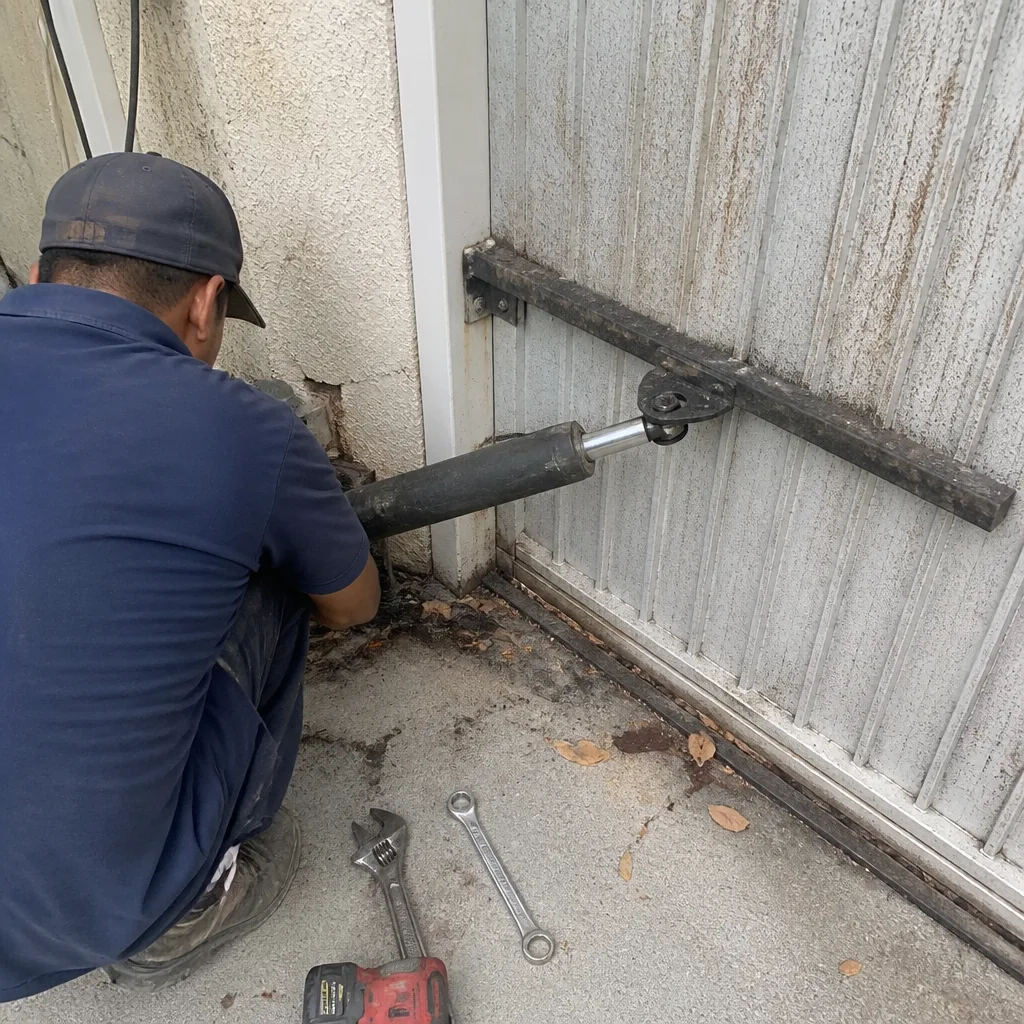 Before
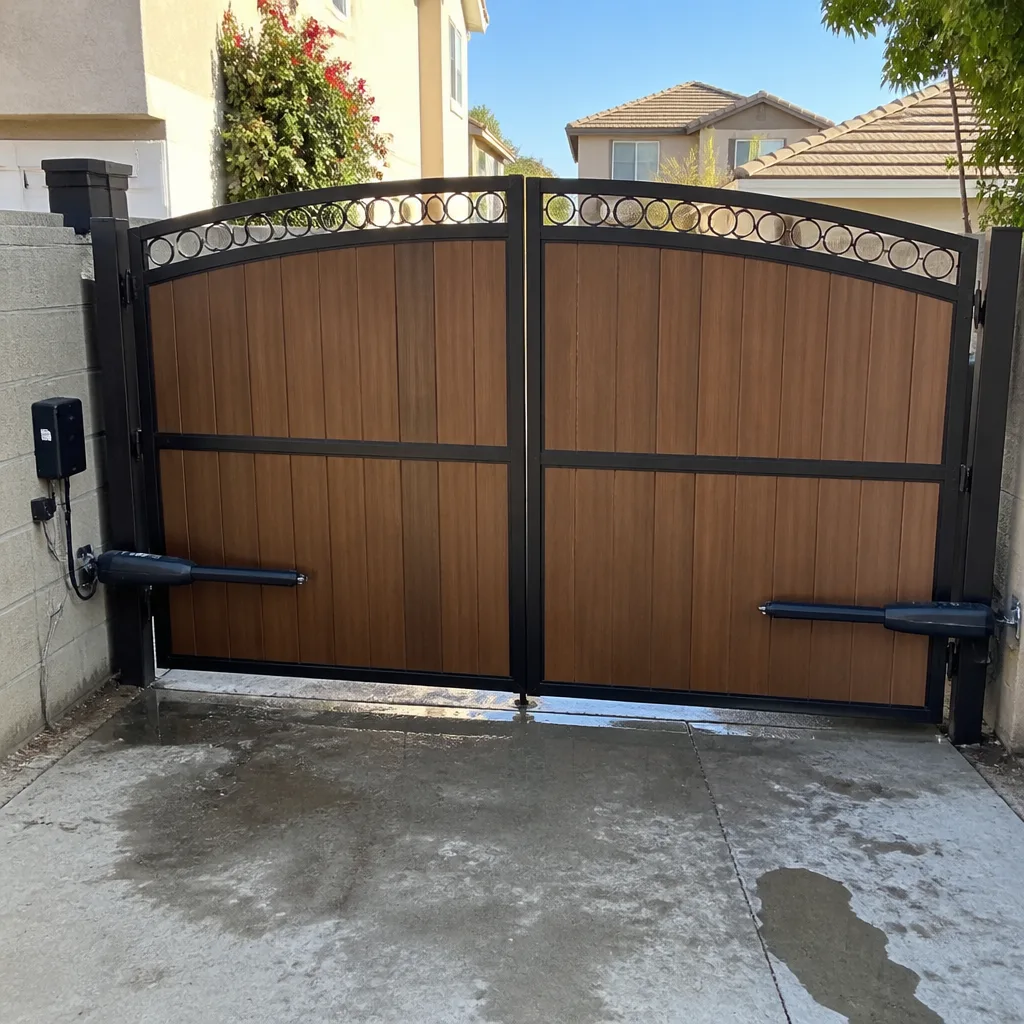 After
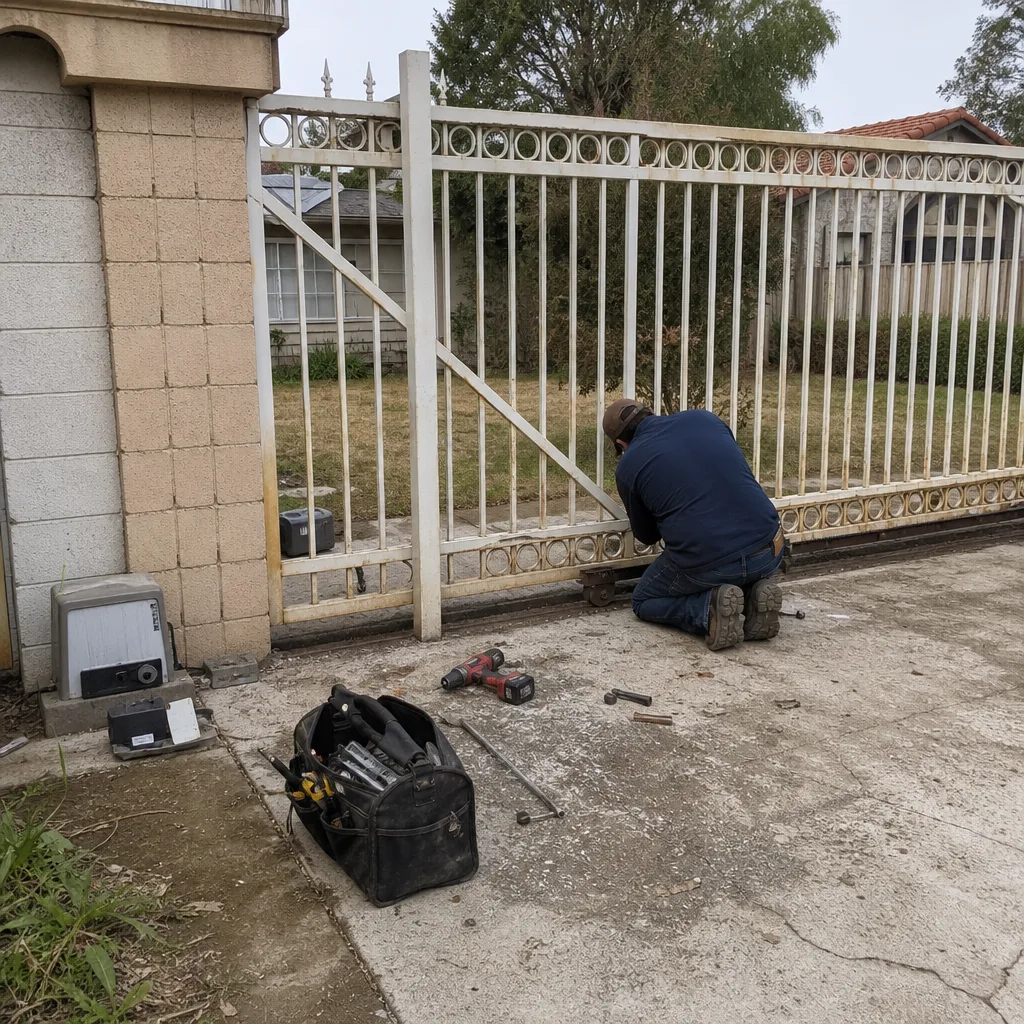 Before
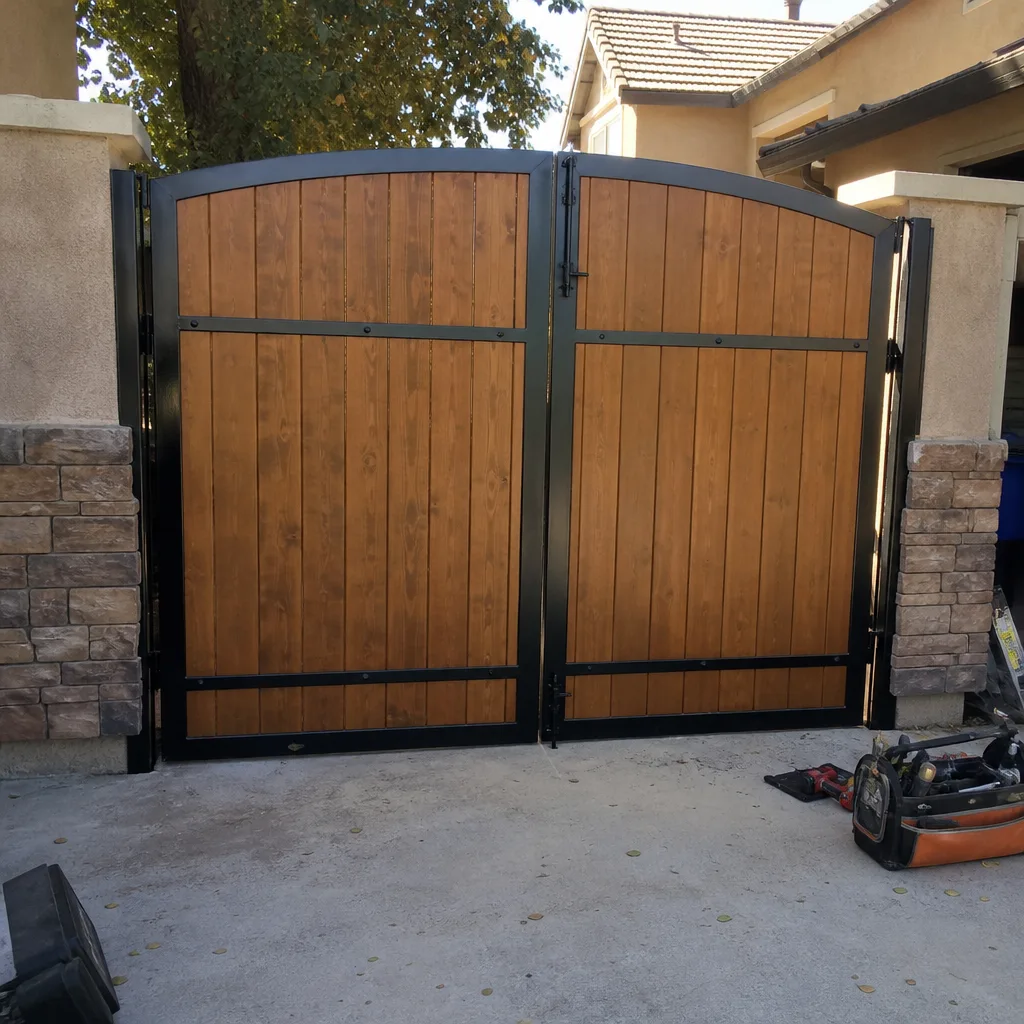 After
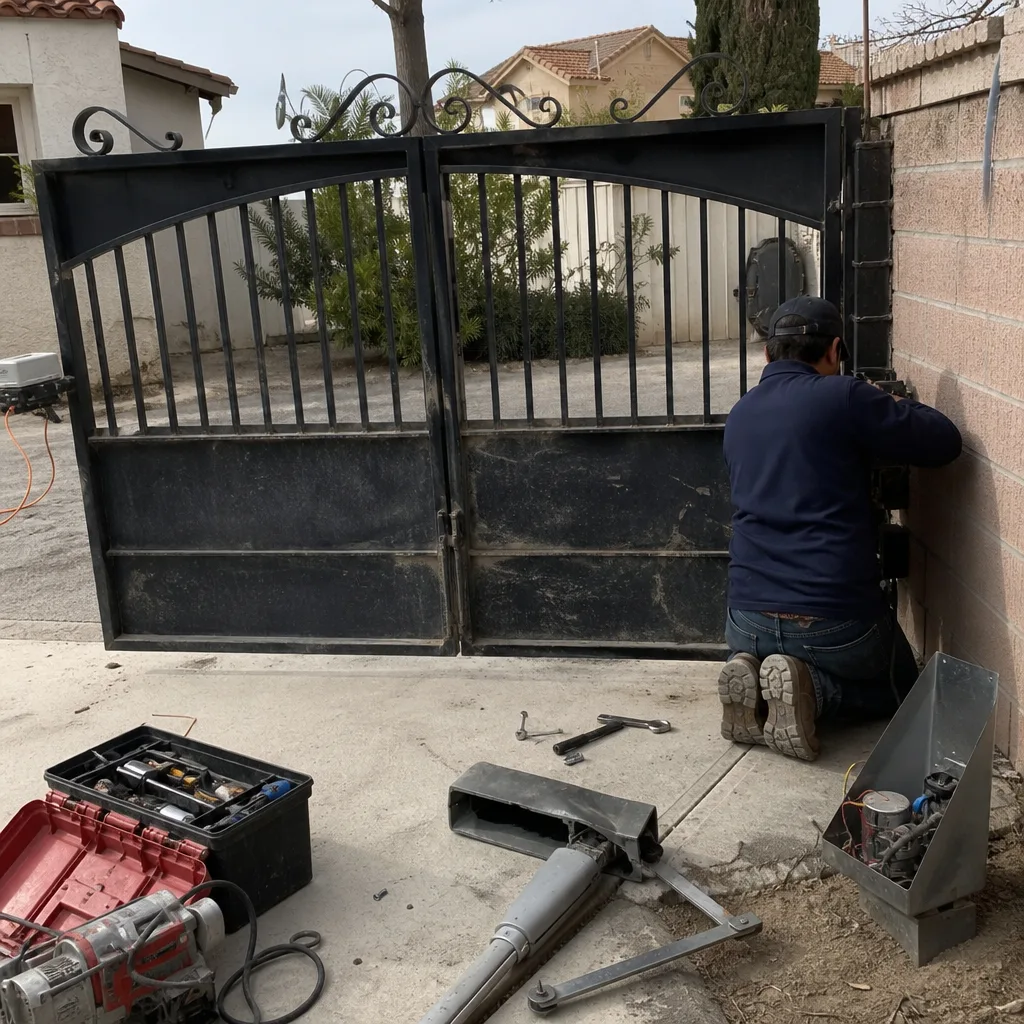 Before
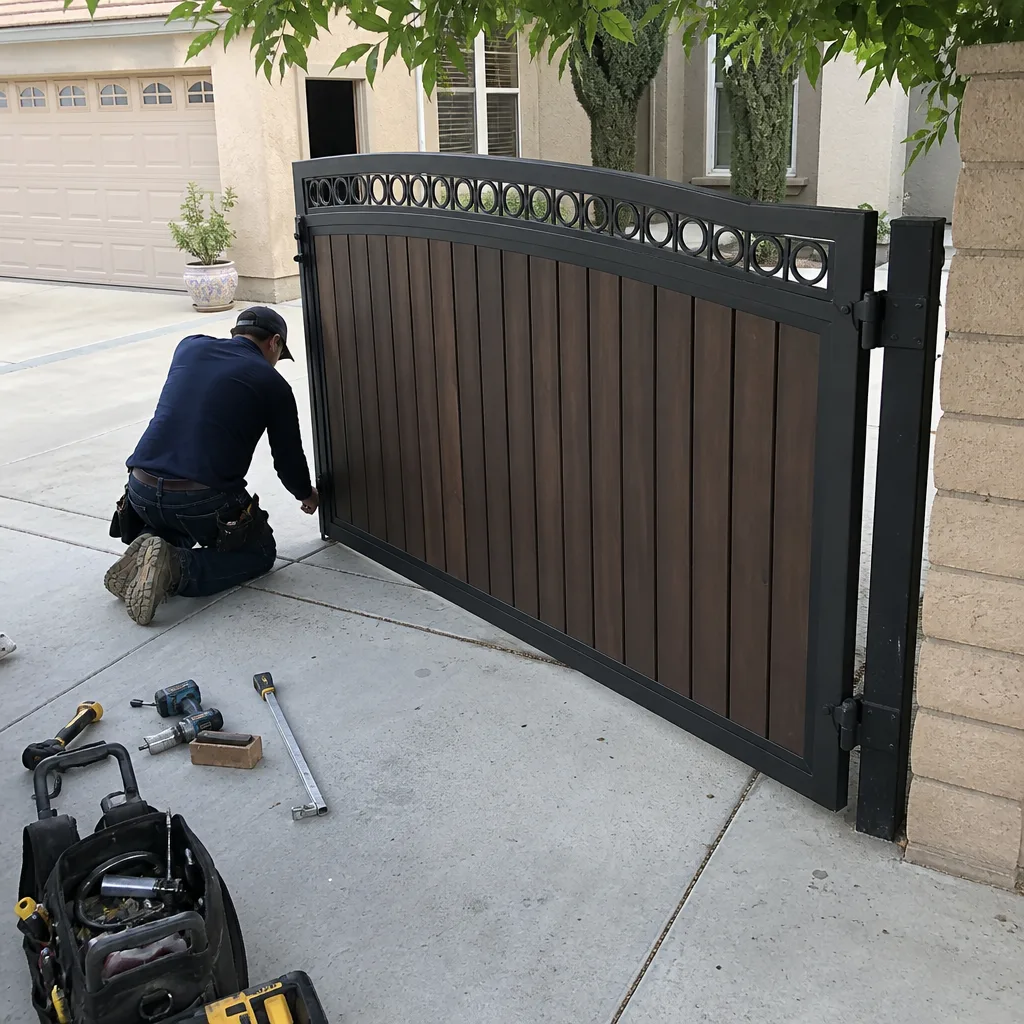 After